
You are sitting in Andrews Library on campus, looking at your laptop. You check Moodle. Your heart begins racing. There is an upcoming exam worth 20% of your grade. You have a quiz tomorrow, readings to finish, and oh, a new assignment your professor forgot to tell you about? Should we mention the club meeting, sports practice, or that call you need to make tonight too? You can feel your heart coming out of your chest.
We all believe that it is just cause and effect: something stressful occurs, and your heart responds. But what actually happens when you are stressed, and how do our brain and heart communicate? What if you had control over these reactions? Would that change the way you respond to stress? College is a stressful time, and it is important to learn how to harness this stress and take control before it goes bad.
The heart-brain axis is a connection between the heart and brain that communicates and controls the way you feel, think, and react to the world around you. Understanding this pathway is important to understand how our brain and body react to stress.
What is the Heart-Brain Axis?
The heart-brain axis is a communication pathway between your heart and your brain. Your brain sends signals to talk to your heart, and your heart does the same to your brain. This relationship is known as a feedback loop, where the signals from your heart and brain constantly influence each other to keep your body functioning properly [1]. When one system is not properly functioning, it can affect the other system [1]. Let’s look at an example: depression and arrhythmia. Depression is defined as a mood disorder that causes a ongoing feeling of sadness and loss of interest [2]. Arrhythmia is defined as an irregular heartbeat, where the heart beats too fast or slow [3]. This connection helps us see that mental health is not just “in your head,” but can affect your body, especially through stress and the nervous system.
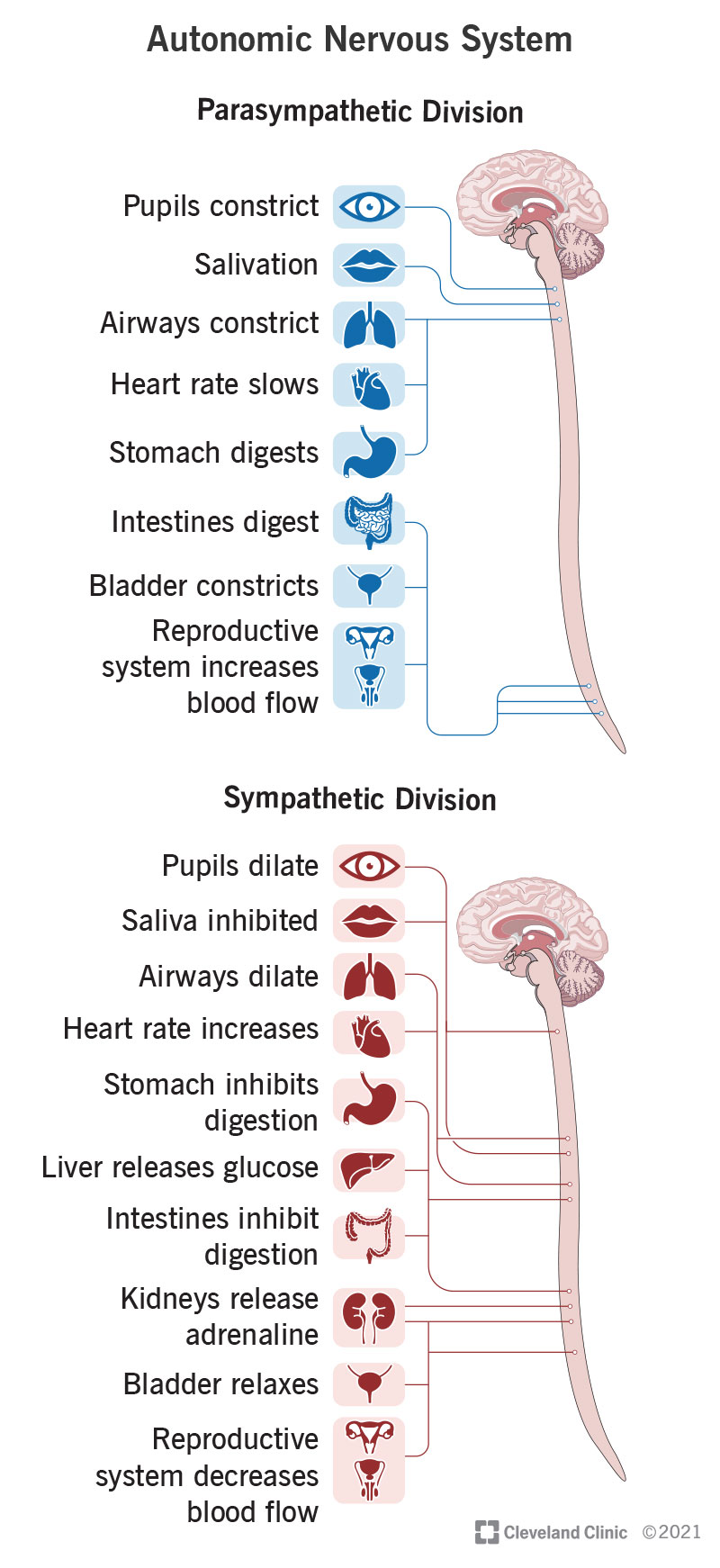
The heart belongs to the circulatory system and the brain belongs to the central nervous system (CNS), and they are connected by the autonomic nervous system (ANS) [4]. When your heart and brain communicate, there is a control system underlying these communications. The control system, or ANS, controls automatic bodily processes [5]. Automatic, or involuntary processes, are processes that occur in your body that you do not have to think about. Let’s take an example: heart rate. As your heart beats, you are not telling your heart to beat every time, making this process automatic [5]. In the ANS, there are two main branches, the sympathetic and parasympathetic nervous system. The sympathetic nervous system is your body’s “fight-or-flight” response and is activated in times of stress or danger, like before an exam [5]. The parasympathetic nervous system is your “rest-and-digest” response, like reading [5]. An overview of the bodily processes that each branch influences to prepare you for “flight-or-flight” or “rest-and-digest” can be seen on the right.
Think of the ANS like driving a car. The sympathetic nervous system is like the gas pedal, speeding things up during stress. The parasympathetic nervous system is like the brake, slowing things down so your body can rest and recover. A healthy body knows when to press on each one, maintaining a good balance even when the road is unpredictable and ever changing. But when the balance is disrupted, it is more difficult to control your feelings and reactions to stressful situations.
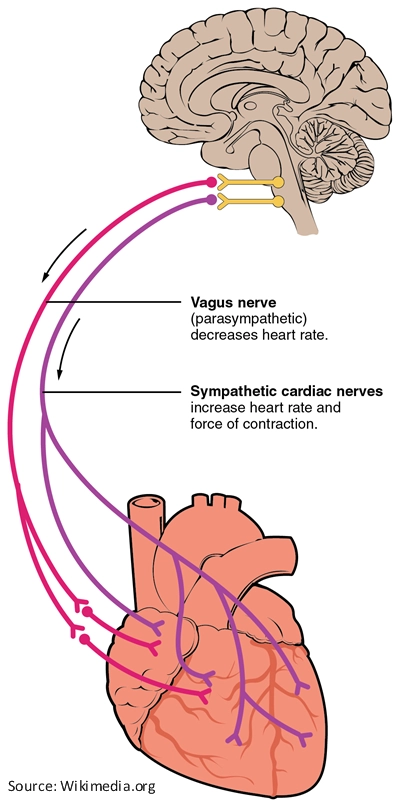
The heart and brain communication is in two directions. First, the heart sends signals to the brain through sensory pathways. As an example of this pathway, receptors in the heart detect changes in heart rate and send information through nerves, up to the brainstem of the brain [1]. The brainstem is located at the bottom, or base, of the brain, serving as a connection between the brain and spinal cord to control involuntary functions like breathing and heart rate [6].The information is relayed within a key region in the brainstem, known as the nucleus tractus solitarius (NTS). The NTS is a relay center before information is sent to other parts of the brain that involved in emotion and decision making [1]. The NTS is like an airport control tower, where airplanes (signals) come into the airport (brainstem) and the control tower (NTS) decides where they should go next. At the same time, the brain also sends signals to the heart. Brain regions that are involved in stress and emotional processes can increase or decrease heart rate through the parasympathetic and sympathetic nervous system, depending on whether the situation was stressful or not. The threat and emotional weight of different environmental stressors are detected by different brain regions. The amygdala, or the fear center of the brain, detects threats in your environment. The prefrontal cortex, the region important for higher-order thinking, is responsible for your response to these different threats. Together, these regions belong to a larger network that coordinates physiological and emotional responses [7].
The heart-brain axis is a physiological connection between bodily processes and the way we think, feel and behave [8]. This continuous back-and-forth communication between the heart and brain keeps them in sync and maintains balance of bodily processes. The heart-brain axis can be used to explain how physical changes in the heart can influence emotions and how mental states such as stress can directly affect heart function.
What is Heart Rate Variability?
But how can we measure the communication between the brain and the heart? One way is by looking at the variation between each heartbeat, known as heart rate variability (HRV). As you know, you heart rate is how many times your heart beats-per-minute (BPM) and HRV is the time between those heartbeats. The time between heartbeats holds special information to understand how your body is functioning and responding to stress. Although it may appear that your heart beats in a regular rhythm, the time interval between each beat is always a little bit different. Many people think the heart beats like a metronome, in a perfect rhythm. For example, if your heartbeat is 60 BPM and it functioned like a metronome, it would beat every second, on the second for 60 seconds. But this is not the case for a healthy heart, as there would be a lot more variation between for when each beat occurs. HRV is commonly measured using electrocardiography or ECG to monitor the time in between each heartbeat [7]. A closer look into HRV can be seen below.
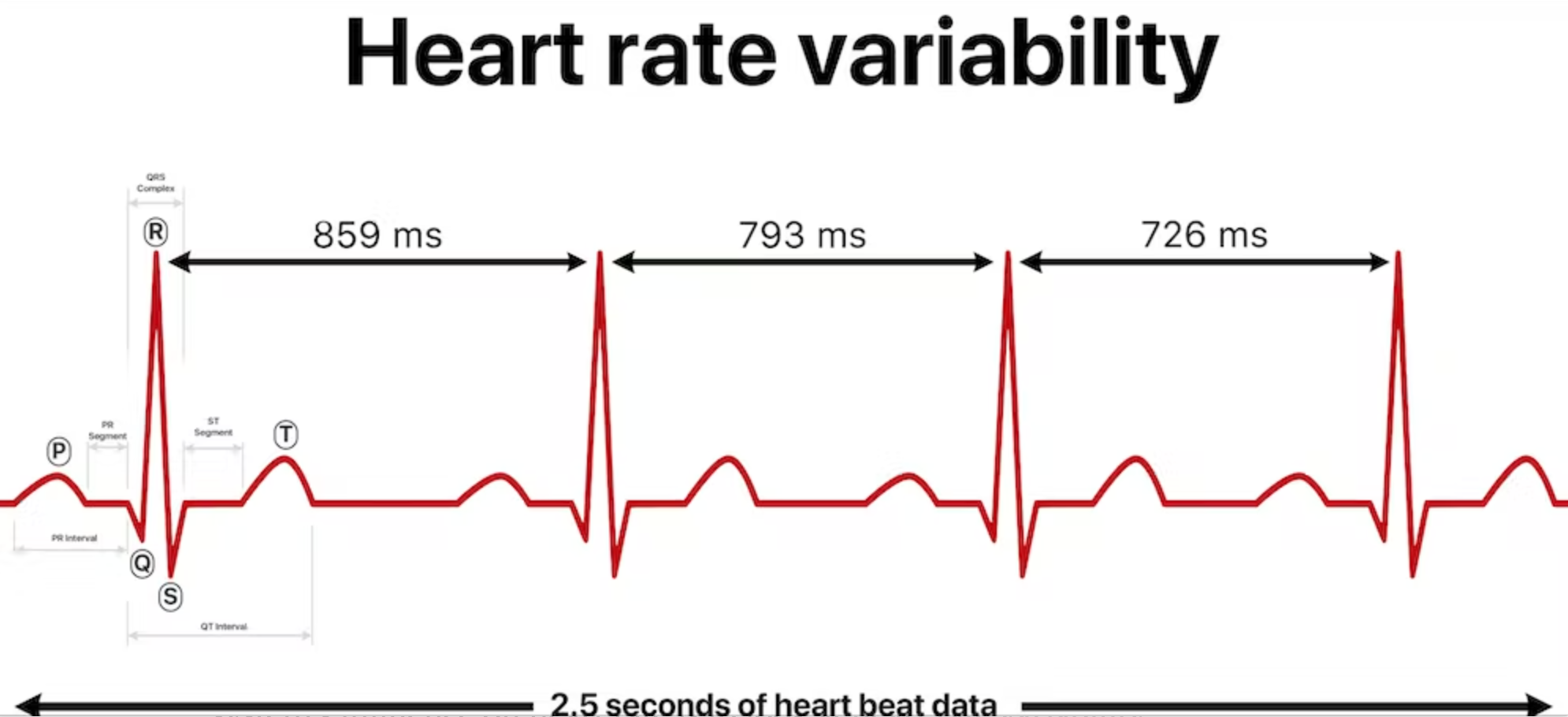
This variability is a way to look into your health, nervous system, and response to stress. By using these measurements, this offers an immediate way to measure the function of the ANS. The greater variation between beats, the higher your HRV, and the more flexible your nervous system is. A higher HRV implies that your body is able to move freely between stress and recovery, like a car can move between the gas and the brake [7, 8]. A lower HRV suggests your body cannot move between the gas and the break, as the body can remain in a stressed state longer or have difficulties with adapting [7, 8]. It is important for your nervous system to be flexible, as you do not want to stay in a stressed out state for too long. Chronic stress can lead to a list of problems, such as decreased energy, difficulty sleeping, and anxiety [9].
People with higher HRV’s have higher activity in the areas of the brain that are concerned with emotional regulation and cognitive control [8]. Higher activity in brain regions involved in emotion and stress show that people with a higher HRV are in a better position to remain calm, focused, and adaptable in stressful circumstances because these regions are activated. On the other hand, this communication is less efficient when HRV is lower. People with a lower HRV may have decreased emotional responsiveness, decreased attention, and inability to bounce back after stress [8].
Flexibility is essential to your nervous system, as it needs to move between activation and recovery states properly. For a healthy nervous system, you need to be able to adapt to stress in response to different events, whether that’s an exam, traffic, or exercise. When the nervous system is out of balance, it can hinder physical performance and emotional regulation. HRV has emerged as a way to comprehend how the body reacts and responds to stress. HRV as a metric provides insight into resilience and demonstrates the ability of a person to adjust to shifting priorities or stressors [7].
How the Brain and Heart Communicate
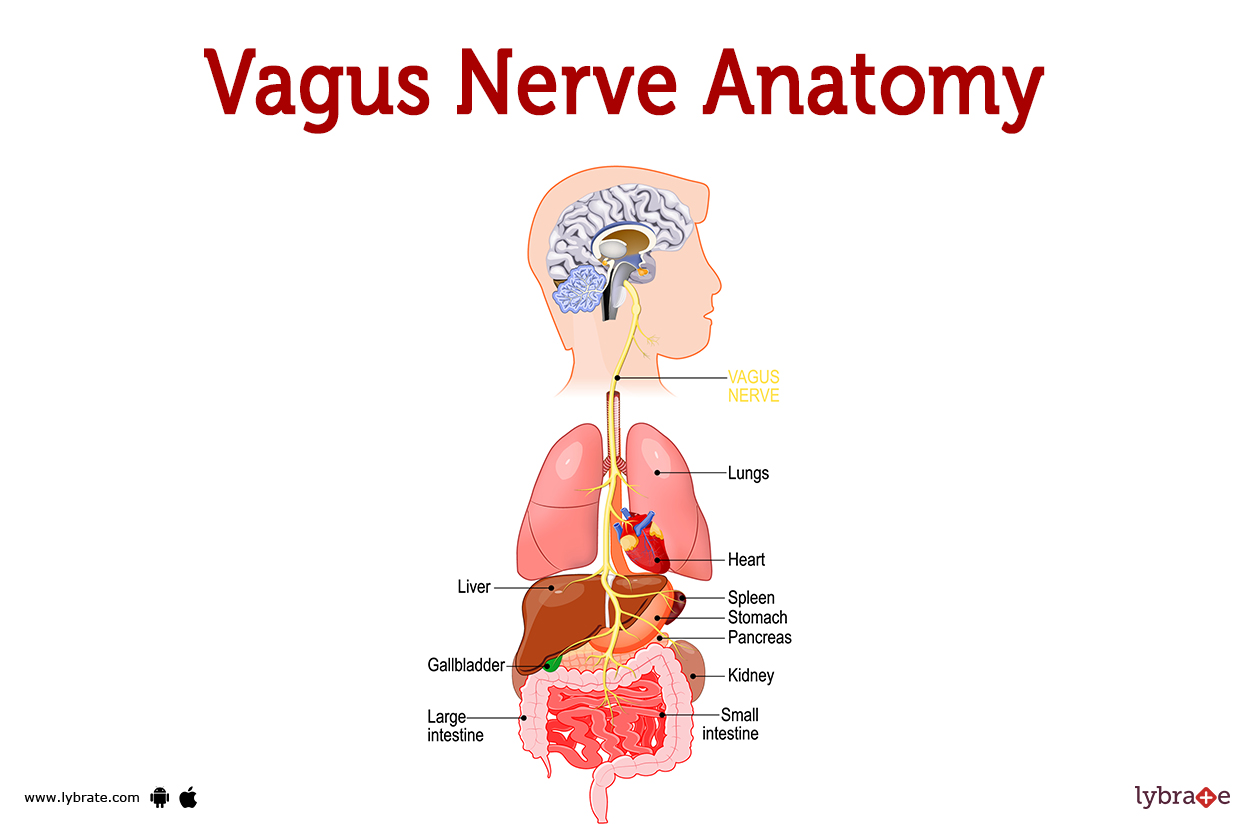
The heart and brain communicate through the vagus nerve, which is a part of the parasympathetic nervous system. The vagus nerve starts at the base of your brain and connects to different organs in the body [10].
This nerve also enables the flow of signals in both directions from the heart and the brain, as we discussed earlier. Studies show activation of the vagus nerve may help regulate the heart function and may be beneficial therapies for heart disease [11]. Isn’t it interesting to see how the nervous system might be used to treat the heart?
A mixture of physiological and neuroscience approaches supports the relationship between HRV, the brain, and stress. So far, we have seen how researchers can examine the function of the heart, but can they also look at the brain to understand stress? Yes! Researchers use different imaging methods to look at the brain. One of these methods is functional magnetic resonance imaging, or fMRI. This tool allows scientists and physicians to see different parts of the brain that change in activation level when someone is stressed, experiencing different emotions, or performing different cognitive activities [12]. FMRI maps out the areas of your brain by detecting blood flow. An increased blood flow would indicate greater brain activity, as your brain needs more energy to help carry out the different processes that occur [12].
Looking at different methods to examine the heart and brain together can offer further insight into the heart-brain axis. But how? Well, previous research has shown us how HRV and the regions responsible for emotion are connected, or correlated [13]. Scientific studies have shown that HRV is connected to proper prefrontal cortex and amygdala activity, where individuals with a higher HRV show better emotional regulation and adaptability [13, 14]. Studies that combine neurological imaging and cardiovascular metrics demonstrate to us how the heart and brain are connected and communicate with each other.
Now, with more wearable device use, such as Apple watch, Whoop, Oura Ring, Garmin, and more, you can measure your HRV without needing to go in the lab. HRV is often used in exercise science as a measure to understand how well your body recovered after a tough, intense training day. By doing so, this allows your body to spend balanced time on the gas pedal and the brake.
Stress and Emotional Regulation
College students are stressed out. Yes, everyone has heard that phrase, and you might have even rolled your eyes reading that. Stress in the short term, such as your heart racing before you present in class, is a good thing. Your body is getting ready for you to perform your best. Your heart starts beating faster, your pupils dilate, your attention is focused on the presentation, or stressor at hand. But on the other hand, if you stay in that stress for a longer period of time, this can cause more bad than good. This is known as chronic stress. Chronic stress may lead to changing the body’s response, leading to a more activation, where your heart is beating really fast, even though there is no immediate stressor in front of you. And we can see how chronic stress impacts your heart-brain axis.
Chronic stress may lead to lower HRV and decreased adaptability to new stressors over time. People with lower HRV often have higher levels of depression and trouble regulating their emotions [15]. On the other hand, people with higher HRV have been seen to have better emotional regulation, increased attention, and higher cognitive performance [14]. We can see that stress is more than just a psychological process, and it is closely related to different processes in your body, such as your cardiovascular system.
Why it Matters
So what? Why does any of this information about the heart-brain axis? Knowledge about the heart-brain axis, and how we can measure that through HRV should change the way we think about stress. Instead of thinking about stress as being only mental, we can see it also affects our body. Being under pressure is not always about working harder, but rather that we are working under a balanced system, like driving a car. Your car needs to be able to go on different routes, up and down winding roads. Similarly, our body and nervous system need to be balanced, maintaining flexibility and recovery. As college students, stress can impact our performance on assignments, quizzes, exams, and presentations. By recognizing how stress can impact different areas of our lives, we can utilize tools to better prepare ourselves for stressful situations.
Ways to Improve
Great news! You can train your response to stress, and it is your power to do so. There are many ways to manage stress, such as regular exercise, breathing techniques, getting quality sleep, and engaging in mindfulness activities [16]. Let’s focus on three ways to manage stress:
- Regular exercise
Exercise, such as walking, running, and cycling, can help mitigate stress in your life. Studies show that people who regularly exercise had half of the perceived stress of people who did not exercise [17].
- Quality sleep
Did you know your stress during the day can impact your sleep at night? Poor sleep can also affect your mood [16]. To get quality sleep, it is best to have a consistent sleep routine. Try to avoid any stimulants, like caffeine, and limit scrolling to create a more relaxing environment [16].
- Meditation practices
There are many studies showing that meditation can decrease stress and anxiety [18]. There are many guided meditations available online, as well as apps like Calm and Headspace. Try meditation, even if it’s just for a few minutes, and see how it may help your mind feel clearer.
So, yes, stress is a part of our daily lives and although it is not always under our control, we can control how we respond to stress. By taking care of your mental health, you are also taking care of your body, and you have the ability to shape how your body responds to stress.
By Natalie Katzenmeyer
Senior Neuroscience Seminar
Spring 2026
References
[1] Fang, S., & Zhang, W. (2024). Heart–Brain Axis: A Narrative Review of the Interaction between Depression and Arrhythmia. Biomedicines, 12(8), 1719–1719. https://doi.org/10.3390/biomedicines12081719
[2] Sawchuk, C. (2022, October 14). Depression (Major Depressive Disorder). Mayo Clinic; Mayo Foundation for Medical Education and Research. https://www.mayoclinic.org/diseases-conditions/depression/symptoms-causes/syc-20356007
[3] Mayo Clinic. (2023, October 13). Heart arrhythmia. Mayo Clinic. https://www.mayoclinic.org/diseases-conditions/heart-arrhythmia/symptoms-causes/syc-20350668
[4] Hu, J.-R., Abdullah, A., Nanna, M. G., & Soufer, R. (2023). The Brain–Heart Axis: Neuroinflammatory Interactions in Cardiovascular Disease. Current Cardiology Reports, 25(12), 1745–1758. https://doi.org/10.1007/s11886-023-01990-8
[5] Cleveland Clinic. (2022b, June 15). Autonomic Nervous System: What It Is, Function & Disorders. Cleveland Clinic. https://my.clevelandclinic.org/health/body/23273-autonomic-nervous-system
[6] Cleveland Clinic. (2021). Brainstem: Overview, Function & Anatomy. Cleveland Clinic. https://my.clevelandclinic.org/health/body/21598-brainstem
[7] Arakaki, X., Arechavala, R. J., Choy, E. H., Bautista, J., Bliss, B., Molloy, C., Wu, D.-A., Shinsuke Shimojo, Jiang, Y., Kleinman, M. T., & Kloner, R. A. (2023). The connection between heart rate variability (HRV), neurological health, and cognition: A literature review. Frontiers in Neuroscience, 17. https://doi.org/10.3389/fnins.2023.1055445
[8] Simón Guendelman, Kaltwasser, L., Bayer, M., Gallese, V., & Dziobek, I. (2024). Brain mechanisms underlying the modulation of heart rate variability when accepting and reappraising emotions. Scientific Reports, 14(1). https://doi.org/10.1038/s41598-024-68352-4
[9] Cleveland Clinic. (2023b, February 7). 10 Strange Things Stress Can Do to Your Body. Cleveland Clinic. https://health.clevelandclinic.org/things-stress-can-do-to-your-body
[10] Cleveland Clinic. (2022a). Vagus nerve: Gastroparesis, vagus nerve stimulation & syncope. Cleveland Clinic. https://my.clevelandclinic.org/health/body/22279-vagus-nerve
[11] Capilupi, M. J., Kerath, S. M., & Becker, L. B. (2020). Vagus Nerve Stimulation and the Cardiovascular System. Cold Spring Harbor Perspectives in Medicine, 10(2), a034173. https://doi.org/10.1101/cshperspect.a034173
[12] Cleveland Clinic. (2023a). Functional MRI – Seeing Brain Activity as it Happens. Cleveland Clinic. https://my.clevelandclinic.org/health/diagnostics/25034-functional-mri-fmri
[13] Matusik, P. S., Zhong, C., Matusik, P. T., Alomar, O., & Stein, P. K. (2023). Neuroimaging Studies of the Neural Correlates of Heart Rate Variability: A Systematic Review. Journal of Clinical Medicine, 12(3), 1016. https://doi.org/10.3390/jcm12031016
[14] Forte, G., Favieri, F., & Casagrande, M. (2019). Heart Rate Variability and Cognitive Function: a Systematic Review. Frontiers in Neuroscience, 13. https://doi.org/10.3389/fnins.2019.00710
[15] Galin, S., & Keren, H. (2024). The Predictive Potential of Heart Rate Variability for Depression. Neuroscience, 546, 88–103. https://doi.org/10.1016/j.neuroscience.2024.03.013
[16] Thorn, B. (2019, November 1). Healthy ways to handle life’s stressors. Apa.org; American Psychological Association. https://www.apa.org/topics/stress/tips
[17] Aldana, S. G., Sutton, L. D., Jacobson, B. H., & Quirk, M. G. (1996). Relationships between Leisure Time Physical Activity and Perceived Stress. Perceptual and Motor Skills, 82(1), 315–321. https://doi.org/10.2466/pms.1996.82.1.315
[18] American Psychological Association. (2019, October 30). Mindfulness meditation: A research-proven way to reduce stress. American Psychological Association. https://www.apa.org/topics/mindfulness/meditation
(2026a). Lybrate.com. https://assets.lybrate.com/imgs/tic/enadp/image-of-the-vagus-nerve.jpg
(2026b). A-Fib.com. https://a-fib.com/wp-content/uploads/2017/01/Vagal-Nerve-diagram-Wikimedia_org-400-x-800-pix.png