Dementia is characterized by the loss of thinking, remembering, or reasoning ability (1). The most common and well-known type of dementia is Alzheimer’s disease. The prevalence of dementia continues to rise with the total number of cases expected to more than double by 2050, affecting hundreds of millions worldwide (1). Additionally, the National Institute of Health (NIH) expects the number of new cases per year in the U.S. to double by 2060 resulting in over one million new dementia diagnoses every single year (2). If that is not scary enough, the lifetime risk of developing dementia for people who reach age 55 is 42% (2). That means if someone lives to be 55, it is essentially a coin flip on whether or not they will develop dementia during the rest of their life.
What makes the rising prevalence of dementia most frightening is that memory loss is the primary symptom of dementia (1). Memory is not just a mental function that dementia takes away, but rather is the foundation of who we are. Our relationships, knowledge, and sense of self are built on our memories. Every experience we have ever had and every belief that makes us who we are relies on memory. Dementia threatens to take away everything that truly makes us ‘us’. Dementia also has no known cure and there is no way to halt its progression once it has been diagnosed. It may seem like the threat of dementia is an unstoppable, impending doom, however there is good news. The brain and memory are not fixed. The brain is adaptable and capable of change throughout life. This means what we do now and throughout life can help strengthen our brain and memory preventing dementia. This article explores how memory functions, how it changes with age, how it breaks down in dementia, and most importantly what we can do to protect it.
How Memory Works: A Living Library
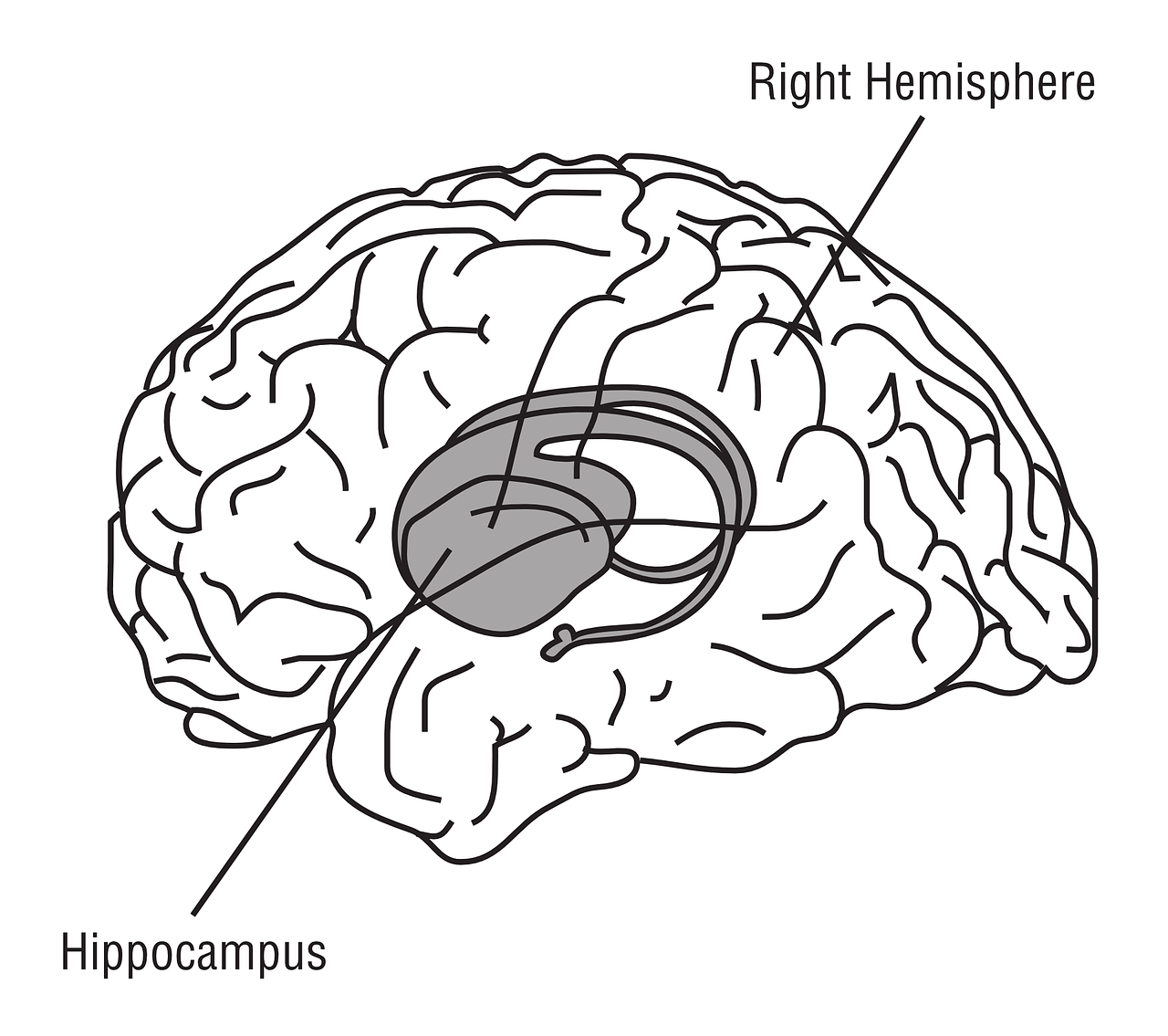
Memory is the process by which the brain retains information, experiences, and feelings over time. To help understand the process of memory, the brain can be likened to a living library where memories are stored in the form of books. Every experience and piece of information someone knows is a book. Some of these books are thick, detailed volumes which can define one’s personality and others are thin pamphlets representing fleeting experiences and information. In the library analogy, the librarian is the hippocampus, the brain’s center for learning and memory. The librarian decides which ‘books’ get cataloged, stored, or discarded.
Memory is defined by three key processes or stages: encoding, storage, and retrieval (3). These three stages of memory perfectly fit into the library description. The process of encoding can be likened to when a librarian receives a new book. The book/memory needs to be unpacked, scanned, and categorized inside the library’s computer system. Then, the librarian or our hippocampus takes this book and stores it in a specific location and shelf in the library. The process of retrieval can be likened to whenever the information in a book is needed, the librarian searches the library to find its location. The librarian can then retrieve that book containing past information for use in the present. The librarian/hippocampus coordinates memory formation, making it essential for cataloguing or encoding new information and storing that information in a specific spot in our brain for later use. The hippocampus is used again for retrieving that information when needed.
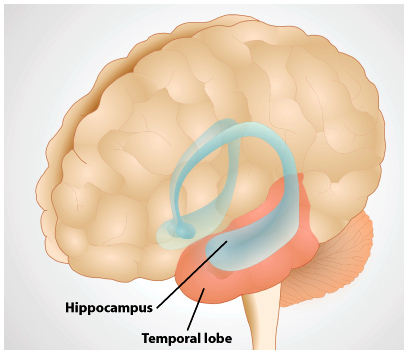
In more technical terms, the hippocampus, located deep within the temporal lobe, temporarily stores short term sensory information and converts it into a meaningful memory through the process of encoding (3). The hippocampus can then save the information as a long-term memory elsewhere in the brain representing the storage process. The hippocampus is also responsible for retrieving the long-term memory whenever we direct our attention to remember that information. The hippocampus is the memory center of the brain because it helps coordinate these stages of memory. It is our brain’s librarian which processes, stores, and eventually retrieves books/memories when needed. Now that we understand how memory works, we can focus on how memory changes throughout aging and dementia.
How Memory Changes through Aging vs Dementia
It is important to note that not all memory changes or impairments are pathological or caused by a disease like Alzheimer’s. As we age, it is normal for memory deficits to occur. The processing speed of our brain slows, our short-term memory becomes more fleeting, and retrieval of long-term memory may become more difficult (4). These are all normal changes to our memory as we age; however, aging does not erase our ability to form new memories or call upon old ones. The memory deficits we experience as we age do not take away chapters of our lives or cause us to lose our sense of self. The effects normal aging has on memory do not take away our ability to do everyday things such as talking, eating, or finding the way home. Daily living can be become more difficult in normal aging, but if severe memory deficits take away our ability to complete daily tasks, it is more likely due to pathological dementia like Alzheimer’s (5).
Dementia causes the same impairments on memory that healthy aging does but to a much greater extent (5). Dementia is an umbrella disorder which contains many types such as Alzheimer’s or Lewy Body dementia (6). Some of these subtypes of dementia are more aggressive than others but is important to understand that all forms of dementia have a progression to them. Memory loss symptoms of dementia may start off with mild forgetfulness or slowness in recalling memories but can progress to the point where no new memories can be formed and few past memories recalled (5;6). Dementia patients can experience complete personality changes due to their loss of memory. Usually in late-stage dementia, patients can begin to suffer psychological symptoms such as agitation, aggression, anxiety, and depression (7). Ultimately, dementia causes severe deficits in memory as it progresses, disrupting daily life and sense of self.
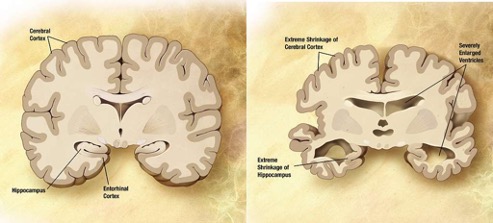
In terms of the biological changes, dementia causes extreme shrinkage of the hippocampus as neurons die throughout disease progression (8). As seen in Figure 2, brains affected by dementia become smaller, or shrink, compared to healthy brains. The large loss of hippocampal neurons is associated with late-stage dementia and is the reason why creating new memories and retrieving past ones becomes nearly impossible. The cerebral cortex, the outer region of the brain responsible for thought, also experiences shrinkage in dementia (8). This shrinkage disrupts the storage process of memory as the cerebral cortex represents the library in which books/memories are stored. As the neurons in the cerebral cortex die throughout dementia progression, the long-term memories stored there can become lost forever.
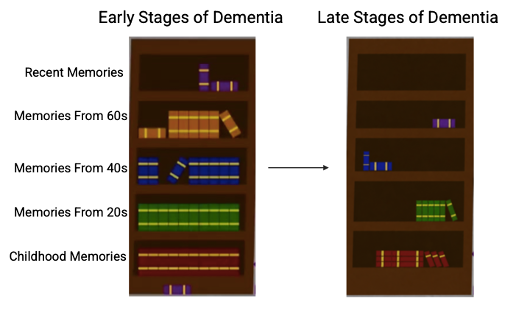
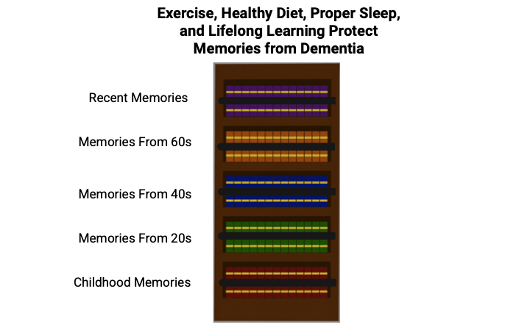
To help think through the progressive effects dementia has on memory, we can again return to the library analogy discussed before. Imagine the bookshelves where the memories are stored. The top of the bookshelf represents the most recent memories while the lower shelves represent older memories. The bottom shelf is where the childhood memories, key to who we are as people, are stored. In the early stages of dementia acts like a small, slight rattle against the memory bookshelf. The most recently formed memories fall off the bookshelf first with the older memories being more stable. This represents the minor forgetfulness which occurs in early-stage dementia. As dementia progresses, it begins shaking the memory bookcase more and more causing older and older memories to fall off. Eventually, dementia progresses to such a point where it turns into an earthquake shaking even the lowest books off the shelf. Once the dementia earthquake shakes the lower books off, who we are as people begins to be lost. We can no longer draw on the past experiences and information that makes us who we are. With that being said, there are ways we can stabilize this bookshelf and prevent dementia from becoming an earthquake that destroys our memory systems.
Ways to Protect Against Dementia
Research consistently points to four lifestyle factors that improve brain health and reduce the risk of developing dementia. The four factors are physical activity, diet, sleep, and lifelong learning. Consistent exercise, healthy diet, proper sleep, and lifelong learning act like brackets on the memory bookcases, protecting our memories from ‘falling off’ due to dementia (Figure 4). Of these four factors, physical activity or exercise is the most powerful and well-researched tool for maintaining memory.
Consistent exercise is beneficial to health in a wide array of ways such as improving blood flow or breathing ability (9). Exercise, specifically aerobic exercise, can make the brain healthier through improving these functions, however, the primary reason exercise makes our brains resilient to memory loss is by increasing the levels of a molecule known as BDNF (brain-derived neurotrophic factor). BDNF is a neuronal growth factor that acts like fertilizer for the brain. When BDNF levels are high, the brain grows stronger as BDNF causes new neurons to grow and stronger communications between neurons to form. The production of new neurons and stronger communication between neurons gives the brain more resistance to the neuronal death caused by dementia (10). We know that BDNF levels increase after aerobic exercise due to blood testing (10). We can utilize blood testing which uses molecules that target BDNF and mark its presence in the plasma of blood. An example of a blood test is the ELISA assay which utilizes enzymes to target BDNF. Once the enzyme locates molecules of BDNF in the blood, we can then add a special chemical that changes color only where the enzyme located BDNF. This allows us to measure the levels of BDNF based on the color change seen (11). One study examined aerobic exercise effects on BDNF levels and hippocampus size in older adults around age 65. After a year of aerobic exercise, the hippocampus size had increased which was directly correlated to an increase in BDNF levels in blood (10). They also found that the individuals with increased BDNF levels actually increased their performance on memory tasks after a year of exercise (10). As discussed before the hippocampus shrinks in dementia, so the increase in size correlated with increasing BDNF levels after consistent exercise shows how physical activity can promote brain growth and protect against the effects of dementia. If you want to keep your memory and brain working properly throughout life, consistent physical activity is one of the best ways.
Another factor that can either contribute to or prevent the development of dementia is diet. What you eat can affect brain health through a variety of mechanisms including how our bodies fight off injury, circulate blood, and process nutrients. Longitudinal studies which follow participants throughout life link poor dietary patterns to cognitive decline (12). The two most described dietary patterns that decrease cognition and memory is the high consumption of saturated fats and high calorie diets (12). Diets high in saturated fats, such as eating large amounts of butter, vegetable oils, or animal lard, are linked to higher rates of cognitive decline in aging adults. On top of this, diets high in calories are correlated with decreased levels of BDNF in the brain, resulting in poorer brain health (12). The decreased levels of BDNF could be a way that bad diet contributes to dementia as decreased BDNF can result in poorer brain health and growth. We can reduce our caloric intake and consumption of saturated fats to protect against dementia. We can also consume ‘brain foods’ which promote brain health and memory function. Most vitamins such as vitamins D, E, C, and B are associated with improved brain health (13). Studies show that people with dementia who follow multi-vitamin protocols reduce the rate of memory decline (12). Eating diets high in fruits and vegetables can reduce our risk of dementia. Fruits, vegetables, and multi-vitamins are high in antioxidants which are compounds that protect neurons and other cells from damage (13). Healthy diets may prevent the loss of neurons seen in dementia through this antioxidant protection (13). It may be beating a dead horse to suggest what we have heard our whole lives, but following a low-calorie, balanced diet leads to a healthier brain. The foods we eat have a direct impact on how our brains function now and how it will function later in life, which might not be something we are thinking about right now.
Sleep is one of the more overlooked factors when it comes to keeping our brains healthy, but it is essential for a healthy memory. Older adults, ages 65 and older, found that individuals who sleep less than 6 hours a night are twice as likely to develop dementia within 5 years compared to people who sleep 6 to 8 hours (14). Another longitudinal study which examined people in their 50s found that people who slept 6 hours or less saw a 30% increased risk of dementia compared to people who simply got the average of 7 hours of sleep (15). In fact, poor sleep can increase the risk of developing dementia 25 years or more in the future (14). The main reason sleep is so important for preventing dementia is through clearance of the brain’s waste (16). Just like other parts of our body, our brains create waste. This waste is toxic and needs to be cleared or else it will damage and potentially kill neurons. Our brain’s waste clearance system, known as the glymphatic system, is primarily active when we sleep (17). If we go without proper sleep, the brain cannot clear its toxic waste which can lead to neuron damage. If we have a lifetime of poor sleep, the toxic waste builds up and can lead to the neuron loss seen in dementia (16). We have all been told that 8 hours of sleep is needed to remain healthy, but it is especially important to sleep for our memory and brain health. The more we go without consistent, healthy sleep, the more we increase our risk of developing memory loss and potentially losing who we are as we age.
The last factor we will discuss that can be implemented in our lives is continued learning throughout our life. Studies have shown strong correlation between early-life education and dementia risk. The more education one receives the lower risk one has at developing dementia (6). Low education in early life, such as the lack of a high school education, is a major risk factor in developing dementia (6). But what about older adults? Can education or learning new things later life impact dementia risk? The answer is yes it does. Later life education such as attending educational lectures or training courses is associated with better memory and cognitive function (18). Later life education is also associated with lower rates of dementia compared to others who do not engage in education (18). A common phrase is used when discussing later life education and memory function which is “if you don’t use, you lose it.” If we do not continue to learn throughout life, our brain and memory function begins to decay which can lead to dementia (18). It is important that we continue to learn new things and educate ourselves throughout the entirety of life so we can maintain a healthy, functioning brain.
Why Starting Now Matters
Many people think of dementia prevention as something older adults should do. That is a big mistake because as discussed in this article the beginnings of dementia can start 20-30 years before symptoms arise. The fear of losing our memory is ultimately the fear of losing ourselves. But neuroscience offers a way to prevent this loss of self through our brain’s ability to adapt and get stronger. By staying active, eating well, sleeping properly, and continuing to learn throughout life, we are not just preserving our current memory but actively building a stronger, more resilient version of it. Hopefully that’s something worth remembering.
References
1. NIA. National Institute on Aging [Internet]. 2022 [cited 2026 Apr 23]. What Is Dementia? Symptoms, Types, and Diagnosis. Available from: https://www.nia.nih.gov/health/alzheimers-and-dementia/what-dementia-symptoms-types-and-diagnosis
2. Fang M, Hu J, Weiss J, Knopman DS, Albert M, Windham BG, et al. Lifetime risk and projected burden of dementia. Nat Med. 2025 Mar;31(3):772–6. doi:10.1038/s41591-024-03340-9 PubMed PMID: 39806070; PubMed Central PMCID: PMC12305800.
3. Zlotnik G, Vansintjan A. Memory: An Extended Definition. Front Psychol. 2019 Nov 7;10:2523. doi:10.3389/fpsyg.2019.02523 PubMed PMID: 31787916; PubMed Central PMCID: PMC6853990.
4. Čepukaitytė G, Thom JL, Kallmayer M, Nobre AC, Zokaei N. The Relationship between Short- and Long-Term Memory Is Preserved across the Age Range. Brain Sci. 2023 Jan 5;13(1):106. doi:10.3390/brainsci13010106 PubMed PMID: 36672087; PubMed Central PMCID: PMC9856639.
5. NIA. National Institute on Aging [Internet]. 2023 [cited 2026 Apr 23]. Memory Problems, Forgetfulness, and Aging. Available from: https://www.nia.nih.gov/health/memory-loss-and-forgetfulness/memory-problems-forgetfulness-and-aging
6. Hugo J, Ganguli M. Dementia and Cognitive Impairment: Epidemiology, Diagnosis, and Treatment. Clin Geriatr Med. 2014 Aug;30(3):421–42. doi:10.1016/j.cger.2014.04.001 PubMed PMID: 25037289; PubMed Central PMCID: PMC4104432.
7. Müller-Spahn F. Behavioral disturbances in dementia. Dialogues Clin Neurosci. 2003 Mar;5(1):49–59. doi:10.31887/DCNS.2003.5.1/fmuellerspahn PubMed PMID: 22034255; PubMed Central PMCID: PMC3181717.
8. Vijayakumar A, Vijayakumar A. Comparison of Hippocampal Volume in Dementia Subtypes. ISRN Radiol. 2012 Dec 2;2013:174524. doi:10.5402/2013/174524 PubMed PMID: 24959551; PubMed Central PMCID: PMC4045526.
9. Patel H, Alkhawam H, Madanieh R, Shah N, Kosmas CE, Vittorio TJ. Aerobic vs anaerobic exercise training effects on the cardiovascular system. World J Cardiol. 2017 Feb 26;9(2):134–8. doi:10.4330/wjc.v9.i2.134 PubMed PMID: 28289526; PubMed Central PMCID: PMC5329739.
10. Erickson KI, Voss MW, Prakash RS, Basak C, Szabo A, Chaddock L, et al. Exercise training increases size of hippocampus and improves memory. Proc Natl Acad Sci U S A. 2011 Feb 15;108(7):3017–22. doi:10.1073/pnas.1015950108 PubMed PMID: 21282661; PubMed Central PMCID: PMC3041121.
11. Zubair M, Singh C, Farhana A. Enzyme-Linked Immunosorbent Assay (ELISA). In: StatPearls [Internet]. Treasure Island (FL): StatPearls Publishing; 2026 [cited 2026 May 4]. Available from: http://www.ncbi.nlm.nih.gov/books/NBK555922/ PubMed PMID: 32310382.
12. Gómez-Pinilla F. Brain foods: the effects of nutrients on brain function. Nat Rev Neurosci. 2008 Jul;9(7):568–78. doi:10.1038/nrn2421 PubMed PMID: 18568016; PubMed Central PMCID: PMC2805706.
13. U.K. Alzheimer’s Society. Diet and dementia | Alzheimer’s Society [Internet]. [cited 2026 May 5]. Available from: https://www.alzheimers.org.uk/about-dementia/managing-the-risk-of-dementia/additional-treatments-for-dementia-risk/diet
14. MD Andrew EB. Harvard Health [Internet]. 2021 [cited 2026 Apr 23]. Sleep well — and reduce your risk of dementia and death. Available from: https://www.health.harvard.edu/blog/sleep-well-and-reduce-your-risk-of-dementia-and-death-2021050322508
15. Robbins R, Quan S, Weaver M, Bormes G, Barger L, Czeisler C. Examining sleep deficiency and disturbance and their risk for incident dementia and all-cause mortality in older adults across 5 years in the United States | Aging. Vol. 13. 2021 Feb 11;13(3):3254–68.
16. Cleveland Clinic. Cleveland Clinic [Internet]. [cited 2026 May 5]. What Is the Glymphatic System? Available from: https://my.clevelandclinic.org/health/body/glymphatic-system
17. Kroesbergen E, Riesselmann LV, Gomolka RS, Plá V, Esmail T, Stenmo VH, et al. Glymphatic clearance is enhanced during sleep [Internet]. bioRxiv; 2024 [cited 2026 May 5]. p. 2024.08.24.609514. Available from: https://www.biorxiv.org/content/10.1101/2024.08.24.609514v2 doi:10.1101/2024.08.24.609514
18. Wang N, Xu H, Dhingra R, Xian Y, McConnell ES, Wu B, et al. The Impact of Later-Life Learning on Trajectories of Cognitive Function Among U.S. Older Adults. Innov Aging. 2025 May 1;9(5):igaf023. doi:10.1093/geroni/igaf023