The Smartest Kid in Kindergarten
When I was in kindergarten, I remember being praised by my teachers because I was the only kid in my class who knew my address. I remember seeing their faces falter a bit as I happily explained that I knew my address because I learned how to call 911 from the moment I could talk in full sentences. I had to learn because my older sister spoke late and my dad worked full-time and my mom, who I was with every day, was epileptic. Honestly, I did not even fully know what that meant myself, I just knew that if I saw my mom shaking on the ground, I had to call 911 and tell them my perfectly practiced speech. Thankfully, I never ended up needing that speech until I was an adult, but I am glad my parents made sure I had it, even as an adult witnessing my mom in a confused state after a seizure was scary and it was comforting to know exactly what to say to the dispatcher. Growing up with an epileptic mom did not seem any different from growing up with a healthy mom. It helped that she had a seizure-free streak of nearly 16 years, starting when I was three, so the seizures that did occur during my childhood I have no memories of, but there were other smaller differences I noticed. For example, my mom seemed to never remember where we parked, she would always ask my sisters and me to keep note of where we parked and eventually, I just started to take note of it without her asking. I remember learning that my mom had been a math major in college, and I felt confused because she was never very good at helping us with our math homework. When I asked her about it, she said she couldn’t remember a lot of the math she learned as a kid, in fact she couldn’t remember a lot of things from when she was a kid. I knew from little things like these that she did not have a good memory, but I did not think about the connection between that and her epilepsy until I was older and started to become fascinated with the brain. I wanted to learn all about epilepsy and memory and the beautiful organ that keeps us all functioning every day.
So, What is Epilepsy?
Many people know that it is a condition that causes seizures, but the reality is a little more complicated. First off, there are multiple different kinds of epileptic disorders, some may occur in only one brain region, but some may be general, affecting many different areas of the brain. Epilepsy can occur in any area of the brain. The factor that brings all epileptic disorders into one category is that they all cause seizures. Seizures are brief periods of overactivity in the brain. There are also multiple kinds of seizures, with some primary kinds being absent seizures and tonic-clonic seizures. Tonic-clonic seizures are what most people think of when they think of a seizure, they are the ones that cause uncontrollable shaking and loss of consciousness, they have previously been called grand mal seizures but now are classified as tonic-clonic. Absent seizures are seizures that are more subtle, they typically look like someone “spacing out” or staring in one direction and not being responsive.
So, what causes a seizure? In the brain there are cells called neurons, they communicate information to one another using chemicals called neurotransmitters that allow the cell to intake an electrical signal in the form of charged molecules. The location where this communication occurs is called a synapse. In a healthy brain, these signals occur regularly but have small periods of time between each signal to let the cell rest for a moment, this is called a refractory period. When a refractory period is ignored, signals get sent one after another, too quickly for the neuron to recover, and that is what a seizure is – the unregulated, reoccurring electrical signals in one’s brain [1]. The brain can’t handle that many signals and starts to send many signals to the rest of the body, sometimes causing muscle spasm or tension which is what leads to the physical symptoms of a tonic-clonic seizure. In absent seizures, the overactivation of signals in the brain sends signals to the body that confuses it, leading to the freezing seen in absent seizures.
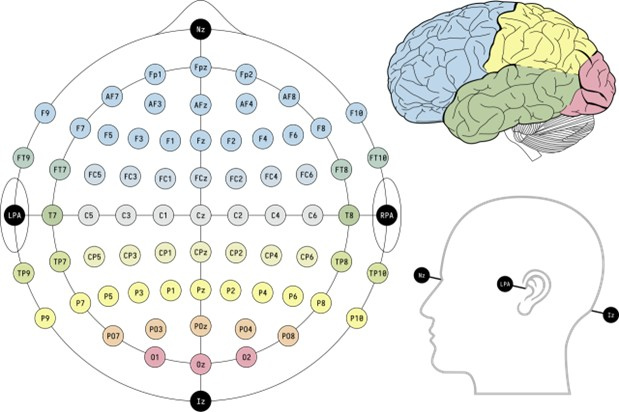

Seizures can be measured through a specific tool called an electroencephalogram (EEG). EEGs measure the electric signals within the brain and gives an output of waves based on those signals. It does this through using electrodes directly placed on the scalp. Through use of EEG, it is possible to see the location(s) of a seizure [3]. Sometimes these areas in the brain where seizures occur become damaged over time. This is because seizures have been linked with neuronal death due to how hard they are on the neurons that are experiencing increased electrical impulses during seizure activity [4]. They also therefore are linked to atrophy of brain areas, or loss of neurons, if enough seizures have occurred in those areas, sometimes causing serious damage [5].
Epilepsy and Memory Loss
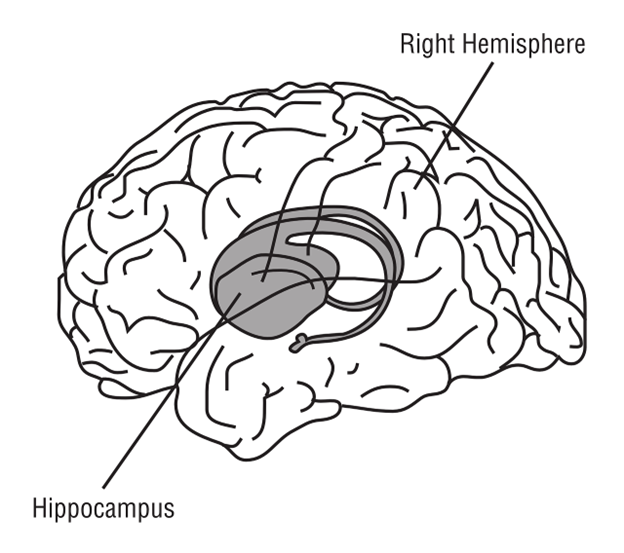
This damage seen in the brain from seizure activity is theorized to be part of the cause of memory loss that is seen in epilepsy. One specific idea is using specific neurons seen in the hippocampus. The hippocampus is a brain region close to the center of your brain that is responsible primarily for turning memories from being short-term into long-term. Within the hippocampus are cells called “place neurons” which are long-term memory neurons associated with a specific physical place. When you are in that place, see that place, or think of (remember) that place, these cells start activate, meaning they send out signals saying that you are in or are thinking about that place. So, if they were to be damaged during a seizure, it is likely that the person would no longer be able to properly recall this place [6]. This specifically is related to spatial memory, a kind of memory focused on physical locations and the orientation that one is in while in these environments. An example of spatial memory that my mom struggled with would be knowing where the car is parked, being able to remember that physical space and how she was oriented in it while parking.
There are many kinds of memory. These are semantic memory, episodic memory, and procedural memory. Procedural memory is related to skills and tasks, such as learning how to ride your bike. Procedural memory is also colloquially called “muscle memory”. Semantic memory is related to known facts, such as who is the president or what year it is. Episodic memory is related to things that happened to you, it is also known as autobiographical memory, an example would be my mom’s lack of knowledge about her childhood. There is a significant difference found in performance on tests of autobiographical memory between those with epilepsy and healthy participants, with epileptic people having significantly worse autobiographical memory [8]. This does point to epilepsy affecting autobiographical memory as well as spatial memory. There is also proof for epilepsy affecting semantic memory as well, with some theories that different kinds of epilepsy may affect different kinds of memories in different ways. This theory suggests that generalized epilepsy will affect all kinds of working memory, the kind of memory that allows you to quickly solve a math problem in your head or to memorize a brief sequence of numbers for a few minutes, as it affects all kinds of brain areas. This theory also speaks on two specific brain regions, the temporal lobe which is on the sides of the brain and is associated with language and memory and the frontal lobe which is located on the forward part of the brain and is associated with decision making and memory. This theory suggests that episodic memory impairment is more common in those with epilepsy affecting the temporal lobe. It also suggests that those with epilepsy affecting the temporal and/or frontal lobe would experience more issues with semantic memory, though the mechanisms differ for each region. For temporal lobe epilepsy, the memory loss is believed to be due to intrinsic loss of semantic memory, whereas for frontal lobe epilepsy it is believed to be due to impairment in executive functioning, specifically issues with the processes of turning short-term memories into long-term memories and retrieving memories [9].
One may believe that because a lot of these are focused on neuronal damage done by seizure activity that those with recent diagnosis of epilepsy do not experience memory loss, but that is not true. While those who have more severe seizures or a history of more seizures may have more severe memory loss than those with less history, those with new onset epilepsy still perform significantly worse on memory tests than healthy counterparts [10]. More specifically, new-onset epilepsy patients may show typical memory scores on neuropsychological tests, but when extended out a week to recall that information again, they showed significantly worse recall than those without epilepsy [10]. This shows that even a few instances of seizure activity can impair memory, meaning that all people with epilepsy will likely experience some level of deficit.
While I mentioned EEG earlier being used to measure seizure activity, they can be used outside of seizure activity too. Those with epilepsy experience epileptiform waves which are specific waves seen on the EEG associated with epilepsy, they typically look like spikes on an EEG output. These can be used to monitor the progress of one’s epilepsy and determine how likely seizure activity is to occur. It is also used to diagnose epilepsy. One specific type of waves measured by EEG are theta waves, which are very low frequency waves, at only 4-8Hz. Theta waves are associated with sleep, relaxation, and dreaming, being crucial for memory as well. In a study done with epileptic participants who complained of memory issues, they were hooked up to an EEG while performing tasks focusing on attention, memory, and executive function. Those who had memory issues had significantly less powerful theta waves than those who did not experience any difficulties with their memory [11]. This means that another explanation for some of the memory loss seen within epilepsy may be that when theta wave signals weaken over time due to overuse during seizure that involves theta waves, that leads to worse memory function, in all types of memory. The discovery of these weakened theta waves can potentially be used to help monitor the progress of memory loss in epileptic patients in the future and lead to physicians knowing how to prevent some of this memory loss, leading to better quality of life for epileptic patients. Quality of life in epilepsy is highly associated with less symptoms, so the earlier treatment intervention starts, the better quality of life [12].
Why Does This Matter?
So, why should you care about all of this? First off, because epilepsy is incredibly common, affecting 1 in 26 people [13]. This means it is incredibly likely that you or someone you love already knows someone with epilepsy or will develop epilepsy. Epilepsy can develop at any point in time, meaning that almost anyone can have a sudden onset of it. The good news is that up to 70% of epilepsy cases are treatable with proper intervention [14]. But that means you must be aware of it in order to treat it. It also is super important to treat it because there is a risk of death in epilepsy. There is a phenomenon called “sudden unexpected death in epilepsy” or SUDEP and the only way to prevent it is to prevent seizure activity. It is a very scary part of the diagnosis, but is not necessarily going to happen, especially if there is control over seizure activity. This is because there has been links between specific kinds of synapses and SUDEP following seizure activity, specifically the AMPA receptor which plays a role in memory. AMPA receptors are present in specific synapses associated with the brain’s ability to change and adapt, which is very important for survival. After a seizure, AMPA receptors are in a more excited state, you can think of it as more energized because of the higher electrical activity during seizures, and that can sometimes lead to death [15]. Death is most common in those who experience generalized tonic clonic seizures because they lead to the largest number of excited receptors. So, it is extremely important to be aware of what seizures look like so after one seizure, people can get help and potentially prevent future seizures from happening by immediately starting treatment if they are found to have epilepsy.
In conclusion, epilepsy is a very serious disorder that affects many people worldwide, but in the majority of cases it is completely treatable. More severe cases may not be treatable and are typically associated with worse quality of life and higher rates of SUDEP. Epilepsy can cause memory loss for all people who have it and it is important to be aware of it so we can all support our loved ones with epilepsy in whatever way they need, just like when I was a kid and would remember where we parked our car.
References
[1] Breton, V. L., Dufour, S., Yotin Chinvarun, Martin, J., Bardakjian, B. L., & Carlen, P. L. (2020). Transitions between neocortical seizure and non-seizure-like states and their association with presynaptic glutamate release. Neurobiology of Disease, 146, 105124–105124. https://doi.org/10.1016/j.nbd.2020.105124
[2] Krol, L. R. (2020). EEG 10-10 system with additional information [Online Image]. WikiMedia Commons. https://commons.wikimedia.org/wiki/File:EEG_10-10_system_with_additional_information.svg
[3] Mayo Clinic. (2024, May 29). EEG (electroencephalogram) – Mayo Clinic. Mayoclinic.org; Mayo Clinic. https://www.mayoclinic.org/tests-procedures/eeg/about/pac-20393875
[4] Fujikawa, D. G., Shinmei, S. S., & Cai, B. (2000). Seizure-Induced Neuronal Necrosis: Implications for Programmed Cell Death Mechanisms. Epilepsia, 41(s6), S9–S13. https://doi.org/10.1111/j.1528-1157.2000.tb01549.x
[5] Xiao, F., Caciagli, L., Wandschneider, B., Sone, D., Young, A. L., Vos, S. B., Winston, G. P., Zhan, Y., Liu, W., An, D., Kanber, B., Zhou, D., Sander, J. W., Thom, M., Duncan, J. S., Alexander, D. C., Galovic, M., & Koepp, M. J. (2023). Identification of different MRI atrophy progression trajectories in epilepsy by subtype and stage inference. Brain, 146(11), 4702–4716. https://doi.org/10.1093/brain/awad284
[6] Mazarati, A. (2008). Epilepsy and Forgetfulness: One Impairment, Multiple Mechanisms. Epilepsy Currents, 8(1), 25–26. https://doi.org/10.1111/j.1535-7511.2007.00224.x
[7] OpenClipart-Vectors. (2022). Hippocampus Brain Anatomy Free Photo [Online Image]. Needpix. https://www.needpix.com/photo/89614/hippocampus-brain-anatomy-medicine-free-vector-graphics-free-pictures-free-photos-free-images-royalty-free
[8] Rayner, G., Siveges, B., Allebone, J., Pieters, J., & Wilson, S. J. (2020). Contribution of autobiographic memory impairment to subjective memory complaints in focal epilepsy. Epilepsy & Behavior, 102, 106636. https://doi.org/10.1016/j.yebeh.2019.106636
[9] Phillips, K. H. T., Patterson, K., Butler, C. R., Woodberry, E., Lambon, M. A., & Cope, T. E. (2024). Does Epilepsy Differentially Affect Different Types of Memory? Seizure, 121, 217–225. https://doi.org/10.1016/j.seizure.2024.08.020
[10] Pugh, R., Vaughan, D. N., Jackson, G. D., Ponsford, J., & Tailby, C. (2024). Memory compromise at extended delays in people with new‐onset epilepsy. Epilepsia Open, 9(5), 1847–1856. https://doi.org/10.1002/epi4.13022
[11] Nastaran Hamedi, García‐Salinas, J. S., Berry, B. M., Worrell, G. A., & Kucewicz, M. T. (2025). Anterior prefrontal EEG theta activities indicate memory and executive functions in patients with epilepsy. Epilepsia, 66(4), 1274–1287. https://doi.org/10.1111/epi.18246
[12] Cianchetti, C., Messina, P., Pupillo, E., Crichiutti, G., Baglietto, M. G., Veggiotti, P., Zamponi, N., Casellato, S., Margari, L., Erba, G., & Beghi, E. (2015). The perceived burden of epilepsy: Impact on the quality of life of children and adolescents and their families. Seizure, 24, 93–101. https://doi.org/10.1016/j.seizure.2014.09.003
[13] Facts & Statistics About Epilepsy. (n.d.). Epilepsy Foundation. https://www.epilepsy.com/what-is-epilepsy/statistics
[14] WHO. (2024). Epilepsy. World Health Organization. https://www.who.int/news-room/fact-sheets/detail/epilepsy
[15] Brodovskaya, A., Sun, H., Adotevi, N., Wenker, I. C., Mitchell, K. E., Clements, R. T., & Kapur, J. (2023). Neuronal plasticity contributes to postictal death. Progress in Neurobiology, 231, 102531. https://doi.org/10.1016/j.pneurobio.2023.102531