Have you ever wondered what goes through a toddler’s head? I’ll bet you have, and I’ll also bet it’s difficult to keep yourself in that state of mind. When I’ve tried to put myself in the shoes of a toddler, I can’t help but get lost in all the disordered thoughts. “What does this do?” “Can I play with this?” “How do I jump on this?” “Does this bend?” Replace ‘this’ with every lamp, tv, and glassware in one’s own home, and chances are you’ve correctly aligned yourself with a toddler’s view of the world.

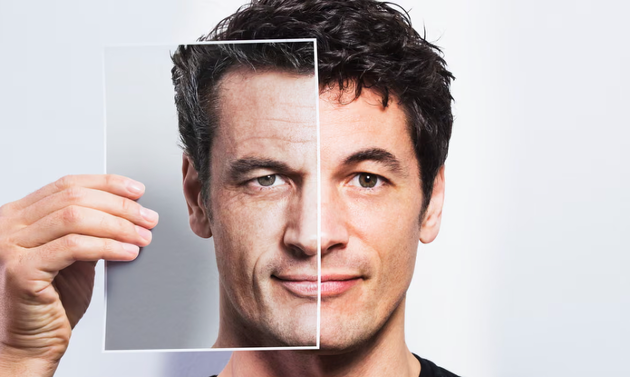
What if I told you that there are little molecules like these toddlers running around our own brains right now? As it turns out, there are. And sadly, depending on who you are, there may be a lot of them. As we age, our brains produce more and more of these energetic ‘toddlers’, called reactive oxygen species, which can harm our brain’s valuable ‘home decor’. It’s a scary thought, but the unfortunate truth is that our brains do not naturally get healthier as we age. Rather, aging causes our brain to become more susceptible to damage, on top of normal ‘wear-and-tear’, which limits our ability to remain sharp into old age. Reactive oxygen species are a large component of this age-associated decline and are a key cause of the physical damage that occurs in our brains as we age. Studies have even shown that our brain physically shrinks around 5% per decade after we turn 40 years old [2]. In addition, some people may have certain brain conditions like Alzheimer’s or Parkinson’s Disease which cause more rapid cognitive decline than normal, and a large portion of this decline is brought about due to the overproduction of these toddler-like molecules. Regardless of our state of mind as we get older, though, our brain’s production of reactive oxygen species is an ongoing, changeable process, and an in-depth discussion of them is required so we can really understand what goes on in our aging brains.
Reactive oxygen species (ROS) are formed initially in mitochondria. Often called ‘the powerhouse of the cell,’ mitochondria are cell structures that produce the energy required for us to live. Mitochondrial function naturally produces molecules called free radicals. These molecules, though only mere byproducts of the energy production process, have many uses for the body, acting primarily as cell signaling molecules. Free radicals are, for example, used to alert mitochondria when energy demands in the body are higher than normal. In addition, free radicals are themselves the signals that our body requires to activate the immune system and destroy invading pathogens [3]. The positive uses of free radicals are quite limited, though, and they are more often than not quite harmful to the cell. The harm they cause is primarily due to their overproduction, causing what is termed ‘oxidative stress’. Excessive production of free radicals, which occurs when mitochondrial function increases dramatically to meet the body’s energetic needs, can cause damage to a cell’s DNA and degradation of vital proteins and fats [4]. While free radical overproduction is dangerous, the damage they can cause becomes even worse when electrons ‘latch’ onto them, making the free radicals incredibly energetic and dangerously reactive. As a result, those free radicals finally commit to their most dangerous form: reactive oxygen species (ROS). It might be useful here to return to the toddler analogy. Think of free radicals as little toddlers. When there are only a few quiet, calm toddlers in a supervised setting, they can be productive. Free radicals, similarly, have important uses in and around the cell, though only when present in low to moderate amounts and under strict bodily supervision. But when free radicals, or little toddlers, acquire
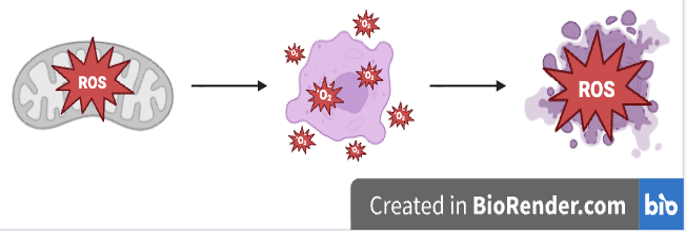
energy, they wreak havoc around the cell/room. Candy is often this energy source for toddlers. But for free radicals, electrons serve that purpose. Candy-intoxicated toddlers are just like electron-rich ROS: both can cause serious damage, and both require a lot of effort to be controlled. Fortunately (or unfortunately for parents), ROS are more amenable to being controlled than toddlers. Luckily, the body has understood this need for a long time and regularly produces a different molecule to control these bundles of energy; one likened to a parent or guardian in charge of a toddler: antioxidants.
Antioxidants are the molecules that keep ROS, as well as our aging bodies, under control. While ROS are only byproducts of mitochondrial function, they can easily build up in and around the cell if left to their own devices. Thankfully, our body produces antioxidants, which make the process of controlling ROS a lot easier. Antioxidants are the molecules that normally serve to neutralize ROS by removing their additional electrons, stabilizing and de-energizing them. This process allows ROS to be more useful for the cell – stable ROS can perform similar cell signaling functions to the aforementioned ones listed for free radicals. Just as toddlers need a teacher’s correction for a classroom to function properly, so too do ROS need antioxidants so that our bodies can function normally. Our body’s antioxidant defense system is just like that stern teacher, and thankfully our body’s control of ROS accumulation limits some of the negative effects of oxidative stress, which will be explored more later on. The bodily maintenance of stable ROS is incredibly important, and it becomes even more so as we age. Antioxidants actually seem to limit the aging process, in certain regards. For example, antioxidants are able to prevent oxidative damage to the cataract of our eyes so that older individuals may not require the often-needed surgery associated with deteriorating cataracts [5]. Further, antioxidants help maintain skeletal muscle health, slowing down our body’s natural tendency towards weaker, more limited movements over time [5]. Among these are many more positive impacts that antioxidants have on the body. However, while our bodies’ use of antioxidants is integral to the health of our aging bodies, the damage done by ROS cannot be overlooked. Aging allows not only for antioxidant production but also for persistent ROS-induced damage.
As we age, the impacts of overproduced and unmanaged ROS become increasingly damaging, and this damage is furthered by a process called aerobic stress. As ROS are byproducts of mitochondrial function, ROS overproduction is more prominent in areas of the body that are rich in mitochondria and have higher energy demands. The brain is a notable example of this kind of body area. Studies even reveal that our brain uses ~20% of the oxygen we normally respire, despite being only ~2% of our body weight [3]. The brain therefore experiences a lot of oxidative stress, but the effects of this stress are often not noticed until individuals are older and the damage is expressed as cognitive decline. This is because our body’s antioxidant defense system thrives when we are young but begins to decline as we age. Over time, our body’s ability to produce antioxidants to neutralize ROS becomes increasingly limited, and the damage done by ROS becomes permanent. Many brain diseases have even been linked to increased ROS production, with Alzheimer’s Disease patients showing, upon post-mortem analysis, significant brain cell damage in areas with high amounts of ROS [4]. Though a little different than in the brain, our body as a whole experiences ROS-induced oxidative damage, too. All of our body’s cells contain DNA, which serves as the blueprint for every single cell in our body to make us who we are. Our DNA slowly disintegrates as our cells divide and grow over the course of our lifetime, and while this normally occurs with age, persistent oxidative stress accelerates this process [7]. Aerobic stress, which is a type of bodily stress wherein increased oxygen consumption is required to meet the energy demands of the body, is one way to cause oxidative stress, and makes ROS-induced damage to our body even worse. In essence, aerobic stress occurs when the oxygen demands of the body overwhelm mitochondria and cause ROS overproduction that cannot be balanced by the body’s antioxidant defense system. Infection, mental stress, and aerobic exercise are just a few examples of things that aerobically stress out the body. While aerobic stress sounds harmful, and is if antioxidant defense remains weak, we can actually use aerobic stress to our benefit. A brief, moderate boost in ROS production can prompt the body’s antioxidant defense system to create more antioxidants in preparation for any events of ROS overproduction in the future. If the body responds properly to spurts of ROS production during aerobic stress, then this type of stress can actually serve to strengthen the antioxidant system of the body.
Exercise, as draining as it can feel in the moment, is one of the best things we can do to prepare our body to fight against ROS. Moderately strenuous aerobic stress, frequently in the form of aerobic
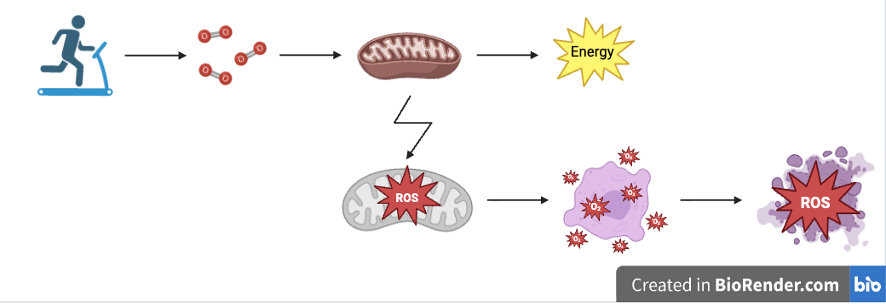
exercise, as in treadmill running or jogging, alerts and strengthens our body’s antioxidant defense system so that ROS clearance/neutralizing can take place more efficiently. While our natural antioxidant defense declines over time, moderate aerobic exercise stimulates the body to produce more antioxidants in preparation for future bouts of exercise [8]. This process inadvertently prepares the body to defend against both the age-associated increase in ROS production and the natural decline in antioxidant
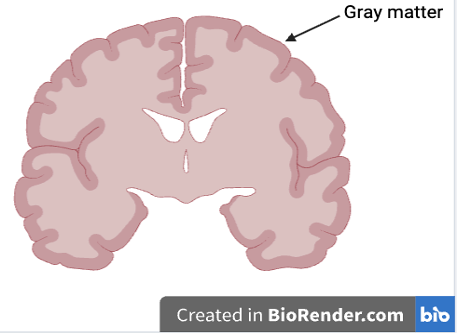
defense. While the benefits of moderate aerobic exercise can positively impact any part of the body, it is most vital to our brain. As previously discussed, the brain requires a lot of energy and is therefore the site of frequent damage by ROS. Brain areas rich in mitochondria, as is the case in brain gray matter, which primarily consists of neuron cell bodies, are often damaged amid strong oxidative stressors because ROS levels remain high in those areas [9]. But recent research has suggested that, rather than doing harm, long-term moderate exercise develops the antioxidant defense system of our brain so that our neurons can form better, stronger connections even when ROS levels remain high. This antioxidant ‘boost’ occurs in many gray-matter rich brain areas, but the hippocampus, the learning and memory center of the brain, is where it has the most impact. Aerobic exercise enhances our ability to
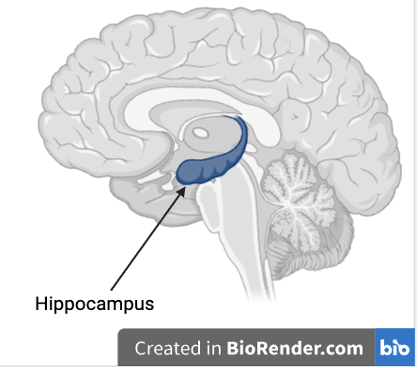
learn and remember things by strengthening hippocampal neurons [10]. The overall positive effects that exercise seems to have on the brain and the body are not limited to the antioxidant defense system, though. While extremely elevated ROS production can, at times, overwhelm antioxidant defense, impair exercise recovery, and induce muscle fatigue [11], moderate ROS production gives our muscles the ability to produce the force they need to perform exercise [8]. ROS’ benefit to muscle function must be tempered with the fact that the negative effects of ROS overproduction still exist. Even so, most current research supports the assertion that an aerobically-boosted antioxidant defense maintains the required daily functions of the body amid ROS overproduction. Scientists use many experimental techniques to study how this claim could be supported or not, focusing primarily on how stress and exercise impact the body. One recently-developed technique has been the most noteworthy thus far: immunoassaying.
Immunoassaying is a vital component of ROS research and helps to quantify the level of oxidative stress in certain tissues. This experimental procedure works by first taking a sample from a test subject. Often,
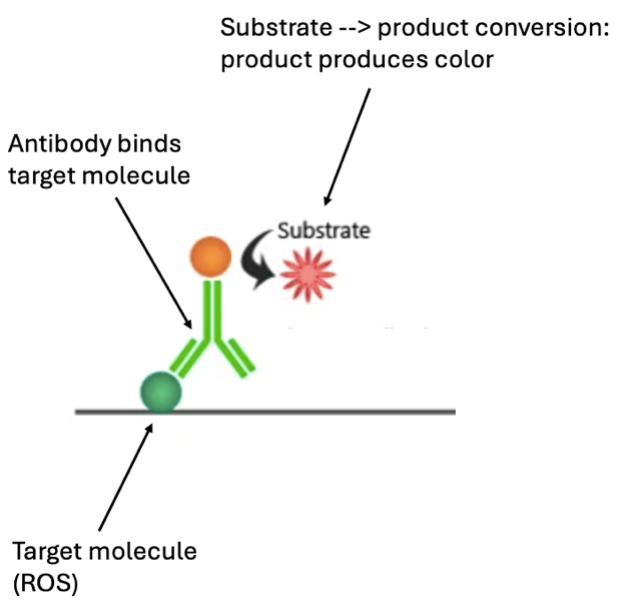
that sample comes from an area of the body or brain that is susceptible to oxidative stress and/or antioxidant defense mechanisms, such as the gray matter of the brain or in muscles. Sometimes even brain slices from a deceased individual/animal can be used, though often the primary sampling technique uses blood samples to determine ROS overproduction throughout the whole body. Regardless of the collection technique, after collecting a sample, an antibody solution is created and mixed with the sample. The antibody is designed to attach to some portion of the ROS target molecule and remain there through experimentation [13]. Attached to the antibody itself is a protein
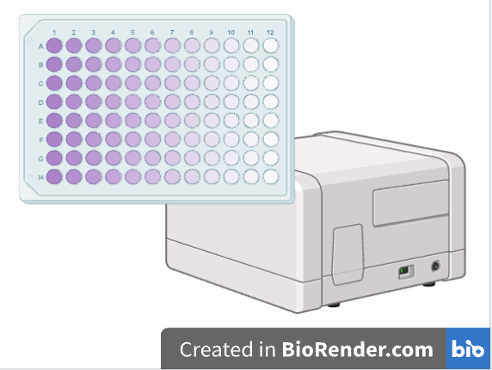
designed to react with a particular substrate that, upon reacting with the protein, emits a color and intensity of light that can be measured via computer analysis. The intensity of light produced can be compared to a standardized result and can, therefore, be thought of as representative of the quantity of the target molecule. The light intensity of the solution can then be used to gauge the level of oxidative stress not only in an individual but also across certain brain/bodily regions. This process allows researchers to gauge the effectiveness of exercise on the levels of certain kinds of ROS or antioxidants, and is the technique responsible for many of the results we previously discussed. Overall, immunoassaying is simply one example, though a key one, of how research has determined the effectiveness of exercise in limiting ROS overproduction.
As parents likely already know, getting your toddler to exercise makes it far easier to get them to be calm and eventually put to sleep. Our bodies, fortunately, are just like that. While ROS overproduction harms the brain and body, exercise prepares our bodies to calm the sugar-rushed ROS so we can stay healthy. Just as taking candy away from a toddler all at once would cause them to have a fit, though, our bodies would also fall into dysfunction if aerobic exercise were introduced too quickly. It is important to allow our bodies a chance to adapt to a new exercise routine. It is generally recommended to perform aerobic exercise for 150 to 300 minutes every week to allow the body enough time to adequately develop better antioxidant defenses, in addition to the other positive, healthy impacts that exercise has on the body [14]. This exercise can most easily be achieved by walking, jogging, swimming, or any other activity that involves whole-body movement. Given that it is incorporated into a person’s life effectively, moderate exercise may serve as the most beneficial defense against ROS overproduction.
Just like stubborn toddlers, we may find that we struggle to get ourselves to do what we know may help us in the future. It is always important, though, to keep the right perspective in mind: toddlers want to grow up to be big and strong like us, so why shouldn’t we want to grow up to be healthy and active, too?
References
[1] The Perfect Photo Of Your Rambunctious Toddler | Petruzzo Photography. (2014, December 11). https://www.petruzzo.com/2014/12/the-perfect-photo-of-your-rambunctious-toddler/
[2] Peters, R. (2006). Ageing and the brain. Postgraduate Medical Journal, 82(964), 84–88. https://doi.org/10.1136/pgmj.2005.036665
[3] Chen, X., Guo, C., & Kong, J. (2012). Oxidative stress in neurodegenerative diseases. Neural Regeneration Research, 7(5), 376–385. https://doi.org/10.3969/j.issn.1673-5374.2012.05.009
[4] Guo, C., Sun, L., Chen, X., & Zhang, D. (2013). Oxidative stress, mitochondrial damage and neurodegenerative diseases. Neural Regeneration Research, 8(21), 2003–2014. https://doi.org/10.3969/j.issn.1673-5374.2013.21.009
[5] Kozlov, A. V., Javadov, S., & Sommer, N. (2024). Cellular ROS and Antioxidants: Physiological and Pathological Role. Antioxidants, 13(5), 602. https://doi.org/10.3390/antiox13050602
[6] Devlin, H., & correspondent, H. D. S. (2017, March 23). Purging the body of “retired” cells could reverse ageing, study shows. The Guardian. https://www.theguardian.com/science/2017/mar/23/purging-the-body-of-retired-cells-could-reverse-ageing-study-shows
[7] Houldsworth, A. (2024). Role of oxidative stress in neurodegenerative disorders: A review of reactive oxygen species and prevention by antioxidants. Brain Communications, 6(1), fcad356. https://doi.org/10.1093/braincomms/fcad356
[8] Powers, S. K., Deminice, R., Ozdemir, M., Yoshihara, T., Bomkamp, M. P., & Hyatt, H. (2020). Exercise-induced oxidative stress: Friend or foe? Journal of Sport and Health Science, 9(5), 415–425. https://doi.org/10.1016/j.jshs.2020.04.001
[9] Mosharov, E. V., Rosenberg, A. M., Monzel, A. S., Osto, C. A., Stiles, L., Rosoklija, G. B., Dwork, A. J., Bindra, S., Junker, A., Zhang, Y., Fujita, M., Mariani, M. B., Bakalian, M., Sulzer, D., De Jager, P. L., Menon, V., Shirihai, O. S., Mann, J. J., Underwood, M. D., … Picard, M. (2025). A human brain map of mitochondrial respiratory capacity and diversity. Nature, 641(8063), 749–758. https://doi.org/10.1038/s41586-025-08740-6
[10] Bonanni, R., Cariati, I., Tarantino, U., D’Arcangelo, G., & Tancredi, V. (2022). Physical Exercise and Health: A Focus on Its Protective Role in Neurodegenerative Diseases. Journal of Functional Morphology and Kinesiology, 7(2), 38. https://doi.org/10.3390/jfmk7020038
[11] Meng, Q., & Su, C.-H. (2024). The Impact of Physical Exercise on Oxidative and Nitrosative Stress: Balancing the Benefits and Risks. Antioxidants, 13(5), 573. https://doi.org/10.3390/antiox13050573
[12] The principle and method of ELISA | MBL Life Science -JAPAN-. (n.d.). Retrieved March 9, 2026, from https://ruo.mbl.co.jp/bio/e/support/method/elisa.html
[13] Marrocco, I., Altieri, F., & Peluso, I. (2017). Measurement and Clinical Significance of Biomarkers of Oxidative Stress in Humans. Oxidative Medicine and Cellular Longevity, 2017, 6501046. https://doi.org/10.1155/2017/6501046
[14] Prosser, Alex.Aerobic Exercise for Brain Health: How to Get the Benefits. (2025, October 17). Healthgrades. https://resources.healthgrades.com/right-care/brain-and-nerves/aerobic-exercise-for-brain-health