
What 5,000 years of perfumery and the strangest pathway in your brain reveal about the future of virtual reality
Anyone who grew up watching anime has probably bumped into Sword Art Online, a series whose central gimmick is a piece of fictional tech called FullDive [10]. You strap on a sleek headset, you close your eyes, and you wake up inside a virtual world that feels exactly like the real one. Food tastes. Flowers smell. A sword cut hurts. The in-universe explanation is that FullDive skips the senses entirely and writes perception straight into the brain, electrically, the way a programmer writes code. The series even predicted that this technology would arrive by around 2020.

We actually have something similar, called “Virtual Reality”. Using a head-mounted display with motion tracking, it enables an immersive experience of a virtual world. Instead of a flat screen, what you will instead have is a replaced digital version of your entire field of view. Our VR tech is, sadly, nowhere near FullDive. What we have instead is a much humbler workaround: deliver real stimuli to the senses and let the brain do its thing. By that standard, we are doing surprisingly well. Modern headsets push displays so sharp that the human eye cannot make out the pixels. Spatial audio tracks your head. Haptic gloves can fake the texture of fabric. Sight, sound, and even touch are well on their way. And yet there is one sense the entire industry seems to have just forgotten about. You would be hard-pressed to find a single consumer VR experience that smells like anything at all.
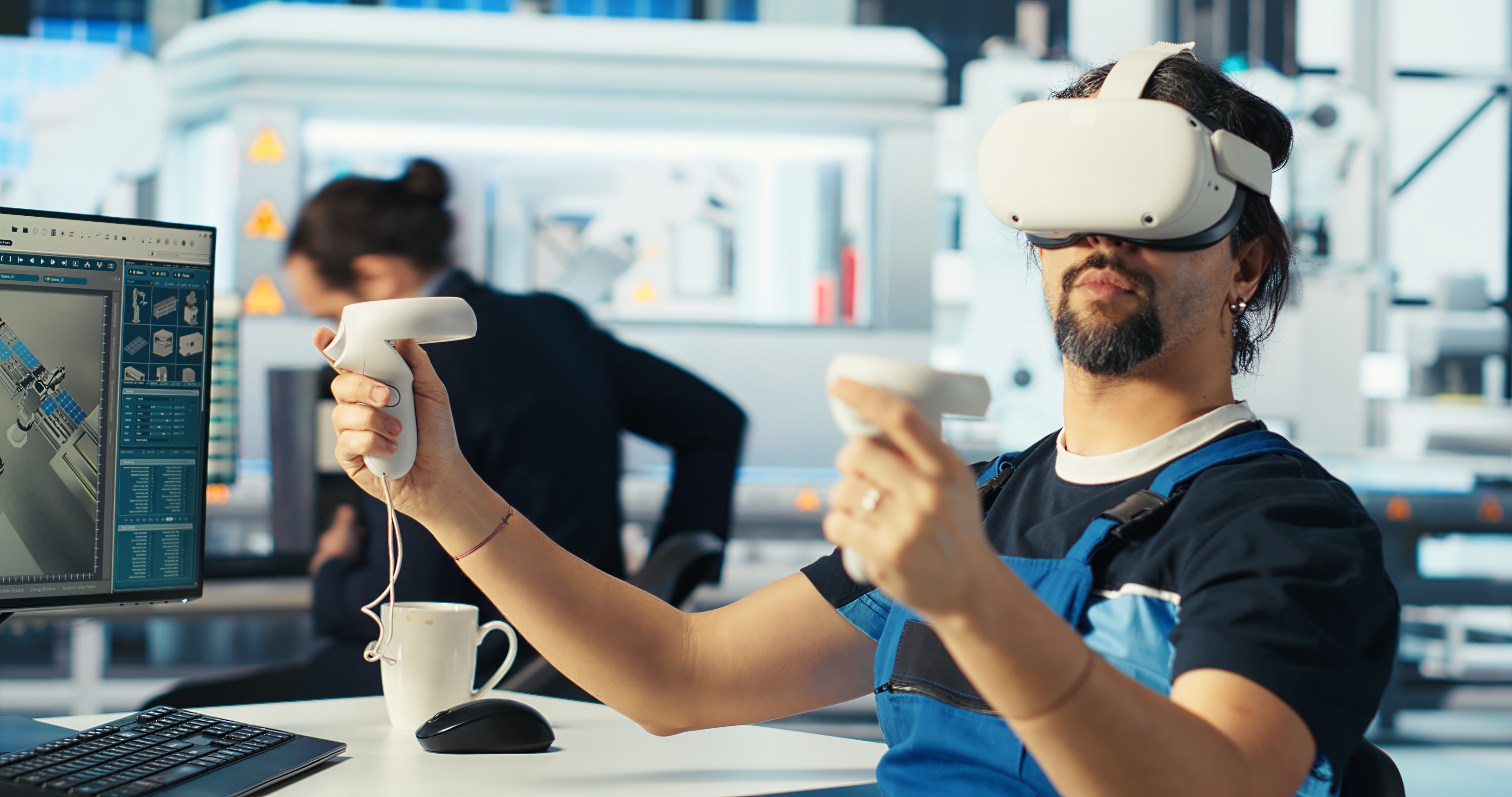
This is a little strange when you think about it, because smell is hardly some new frontier. Humans have been obsessing over it for millennia. By around 3000 BCE, Mesopotamians and Egyptians were already producing perfumes for religious rites and for, let us call it, looking impressive in front of royalty. A Mesopotamian woman named Tapputi, whose name shows up on cuneiform tablets from around 1200 BCE, is the first person in recorded history to be called a chemist. She was, you guessed it, a perfumer. Egyptian priests burned scented resins in temple ceremonies, and archaeologists have opened tombs whose perfume jars still faintly carried their scent thousands of years later. Cleopatra, allegedly, soaked the sails of her ship in perfume before sailing out to meet Mark Antony, which we can all agree is the kind of move that gets you remembered.
So why is something we have been doing for five thousand years still the missing piece of a technology built specifically to simulate reality? The blunt answer is that sight and sound are physical waves and smell is a chemical molecule. A monitor produces light by exciting pixels with voltage. A speaker produces sound by vibrating a membrane. Smell, by contrast, requires getting an actual molecule into the air and into your nose. There is no waveform to compress. There is no “sound file” of cinnamon.
To see why that matters, it helps to follow a single odorant molecule on its little journey. The molecule, light enough to float, drifts up through your nostril and lands on a thin patch of tissue called the olfactory epithelium, sitting near the very top of your nasal cavity. Embedded in that tissue are olfactory receptor neurons, each one carrying receptors that bind to specific kinds of molecules in a roughly lock-and-key way. Here is the fun part. Each receptor type is wildly picky about which molecules it gets excited by, kind of like a soccer mom who only cheers when her own kid is on the ball. You only have about 400 working receptor types, which sounds like very little, until you realize that combinations of them produce the perception of perhaps a trillion distinct smells. The math is the same as your color vision. Three types of cone cells in the retina, sensitive to red, green, and blue, can mix every color you have ever seen. Smell just works with a much, much bigger palette.
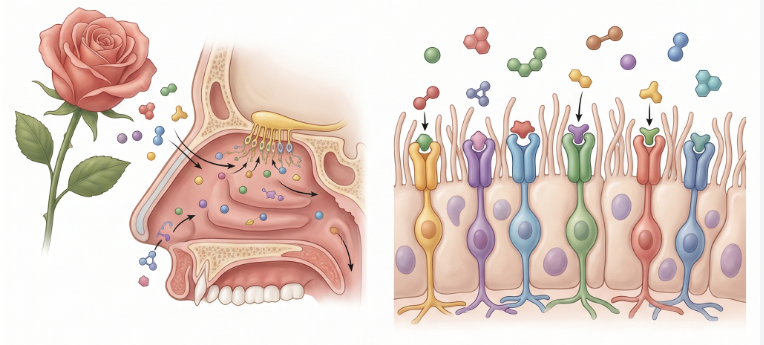
When a receptor binds an odorant, it fires a signal up to a structure called the olfactory bulb, a small lump tucked just under the front of your brain. From the bulb, the signal heads to three places at once: the piriform cortex, which figures out what the smell actually is, the amygdala, which slaps an emotional sticker on it, and the entorhinal cortex into the hippocampus, which files it away as a memory. So far, so normal.
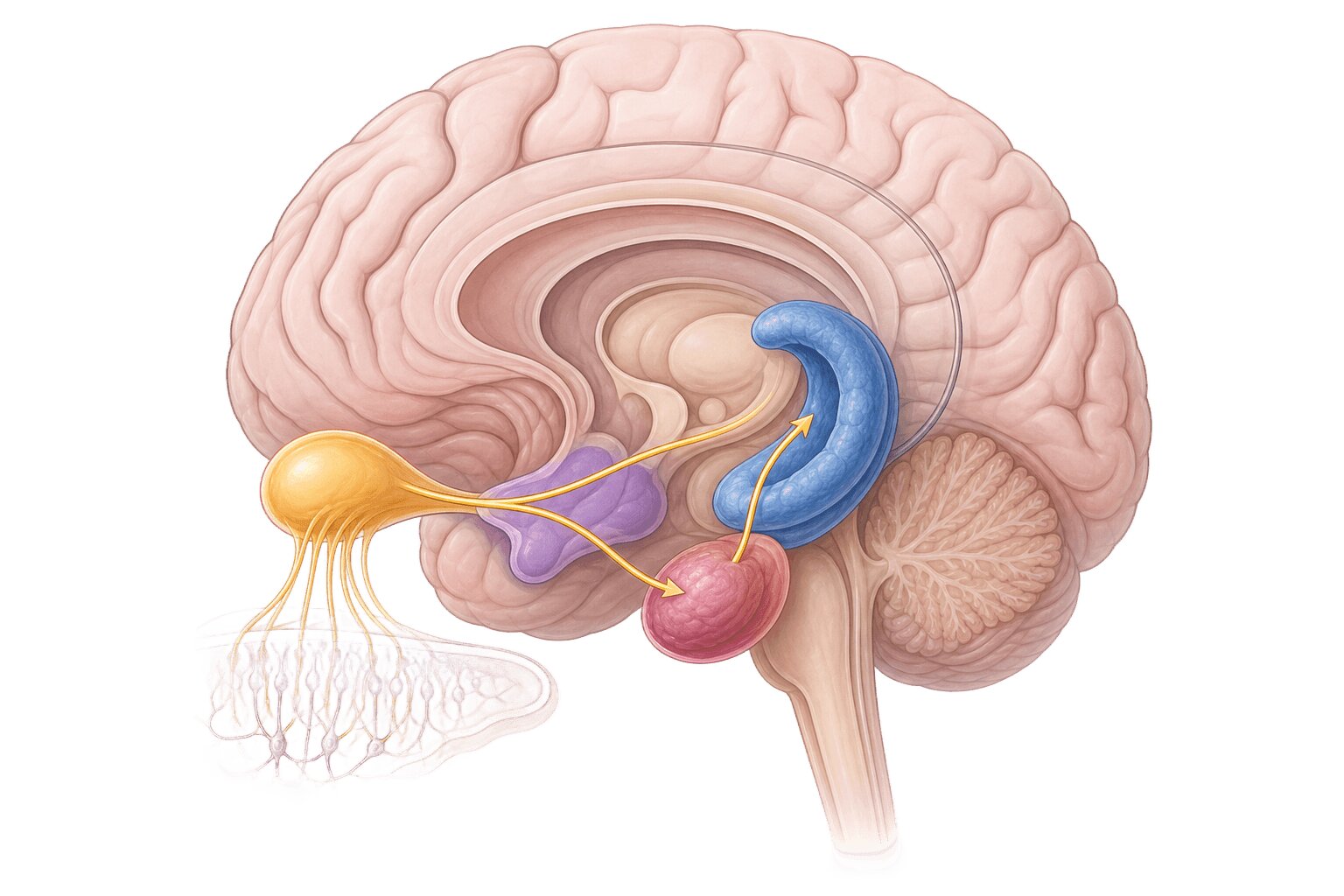
Here is where olfaction gets weird. Every other sense in your body—sight, sound, touch, taste—sends its first signals through a structure called the thalamus before reaching the cortex. Think of the thalamus as the brain’s grand central station, where information gets sorted and routed and given a track number. Smell skips it entirely. Olfaction is the only sense that bypasses the thalamus on its first pass and dumps its signal straight into the limbic system, the cluster of structures in charge of emotion and memory. The practical consequence is that a scent gets to your emotional brain before your rational brain ever has a chance to weigh in. That is the reason a stranger’s perfume can drop you into a memory of your grandmother’s kitchen before you can even name the smell.
How do we know any of this? Modern neuroscience has a pretty rich toolkit for poking around. The classical workhorse is fMRI, or functional magnetic resonance imaging, which tracks blood flow as a proxy for brain activity. Show somebody a scent, watch their piriform cortex light up on the scan, and you have evidence that this region processes smell. fMRI is great at telling you where things happen but kind of slow at telling you when. For speed, neuroscientists turn to EEG, electroencephalography, which sticks electrodes on the scalp and reads the electrical activity of cortical neurons in real time. The catch is that EEG is fuzzy on location. The two methods complement each other nicely. fMRI tells you where, EEG tells you when. There are also more dramatic methods. A 2023 case report described a patient who began experiencing brand new odor-triggered autobiographical memories after a stroke in the right posterior cerebral artery, which pretty much confirmed that the hippocampal circuitry is doing the heavy lifting [5].
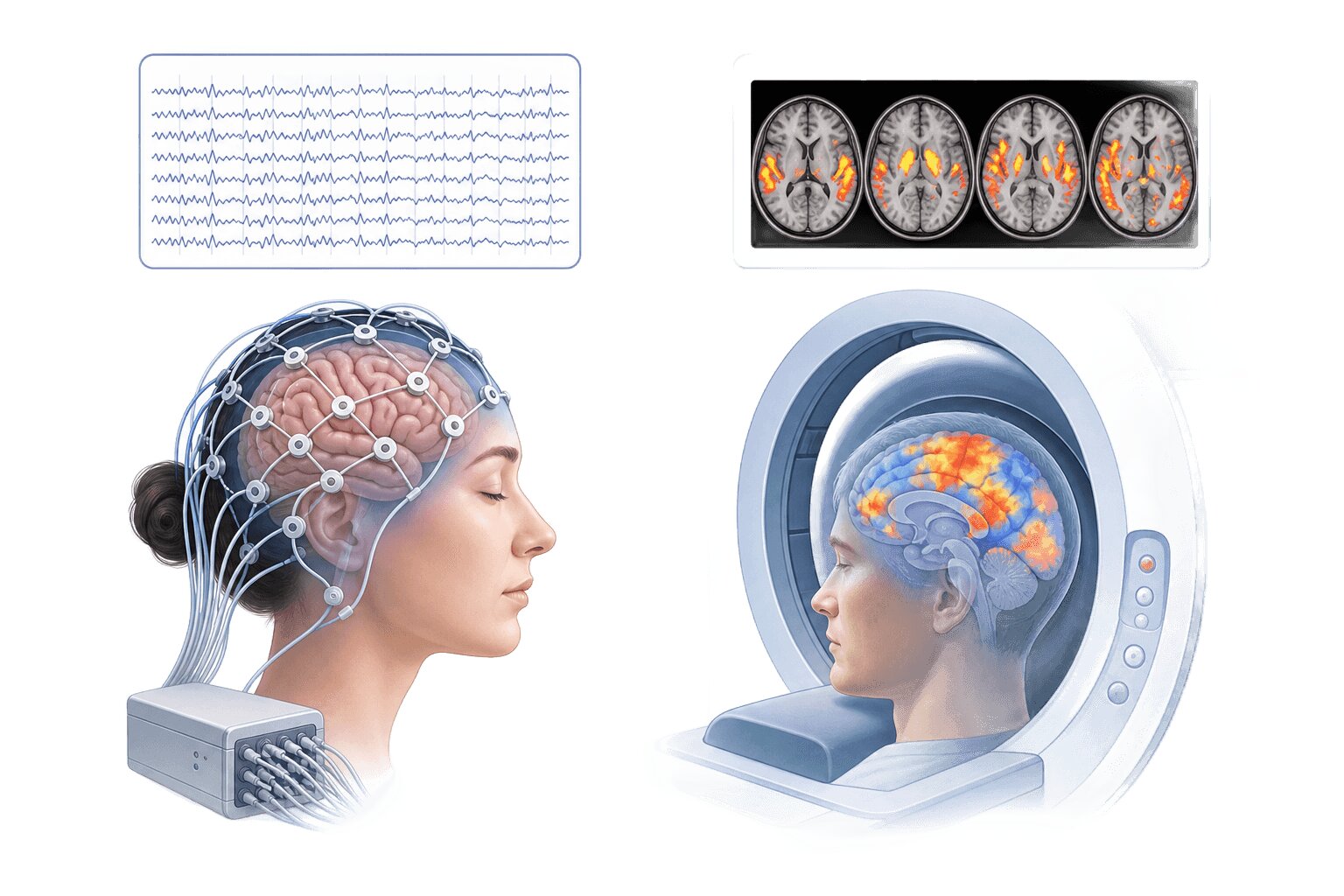
The newest and honestlly coolest method is the combination of VR and EEG. Picture a participant wearing a VR headset, with electrodes attached to their scalp, while a small olfactory device puffs scented air at them on cue. Because the visuals, the timing, and the scents are all under software control, researchers can finally ask very specific questions that older designs couldn’t even attempt. A 2021 study by Colombo and colleagues used exactly this setup and showed that lavender, paired with a calming virtual landscape, increased frontal theta activity, a brain rhythm linked to focused but relaxed information processing [2]. A separate study by Flavián and colleagues showed something even more interesting. The match between what you see and what you smell, which they called aroma-content congruence, dramatically changes how immersive the experience feels [4]. A virtual pine forest with a pine scent feels real. A virtual pine forest with a vanilla scent feels weirdly wrong. The brain notices, even when nobody is consciously paying attention..
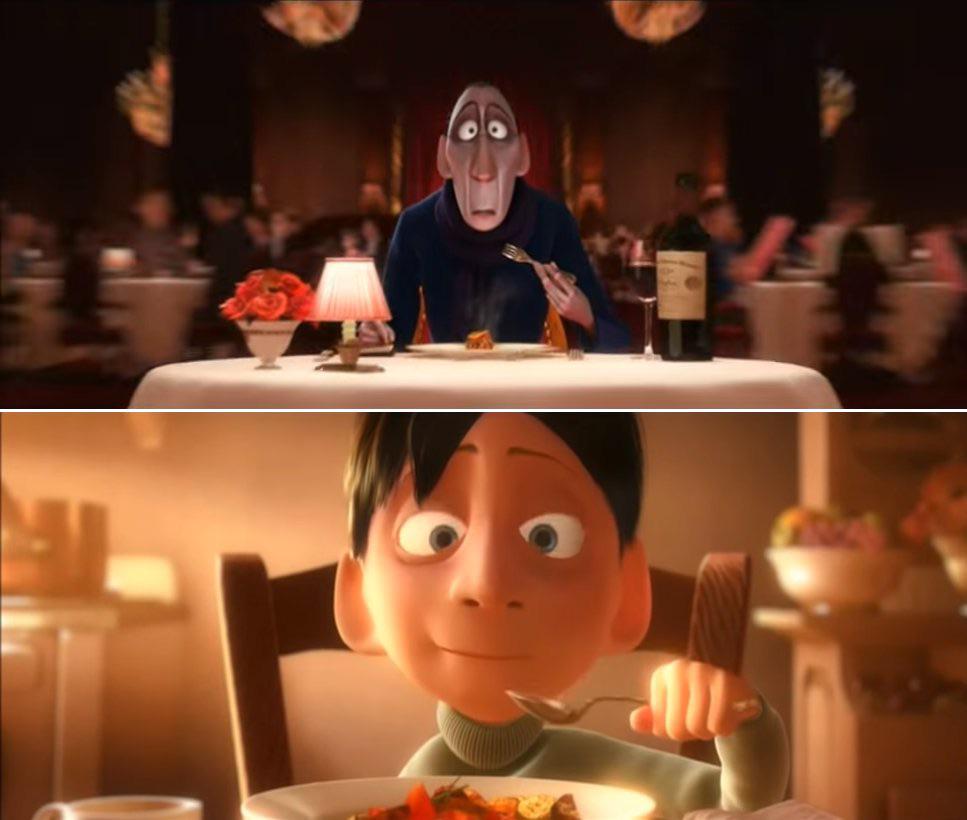
You have almost certainly experienced what is now called the Proust Effect, even if you didn’t know the name. There’s a famous scene in Ratatouille where the food critic Anton Ego takes a single bite of the title dish and is, in an instant, mentally transported back to a childhood afternoon in his mother’s kitchen [1]. It feels like a dramatic flourish, the kind of thing filmmakers invent to move the plot, but the phenomenon is completely real. Researchers borrowed the name from Marcel Proust’s novel In Search of Lost Time, in which the narrator dips a madeleine into tea and is hit with the same kind of vivid childhood flashback. Modern studies show that odor-cued memories tend to be older, more emotional, and harder to censor than memories triggered by words or pictures. The mechanism is exactly the thalamus bypass we just talked about. Olfaction routes directly to the amygdala and hippocampus before the cortex can sanitize the experience. A song from high school can make you nostalgic. A particular scent can ambush you and make you cry without warning.
Here is another smell fact that tends to surprise people. Most of what you call taste is actually smell. Your tongue itself only registers about five basic categories — sweet, salty, sour, bitter, and umami. Everything else, the recognizable flavor of a strawberry or a coffee or a roast chicken, comes from a process called retronasal olfaction. When you chew, air carrying volatile molecules flows from the back of your mouth up into your nasal cavity, where it lights up the same olfactory receptors you use for sniffing things in the air [9]. This is why people who lost their sense of smell during COVID famously reported that food tasted like nothing. Their tongue still worked perfectly. Their brain just lost most of what it usually calls flavor. Estimates put the contribution of olfaction to flavor perception at somewhere between 75 and 95 percent. Perfumers have known this forever, which is why there is an entire category of fragrance called gourmand, full of vanilla, caramel, and coffee notes designed to feel warm and edible because they hijack the same circuits that handle real food.
The combination of strong emotional impact and direct memory access makes smell genuinely useful in the clinic. Veterans with PTSD often report flashbacks triggered by very specific smells, the smell of diesel fuel, the smell of a certain kind of dust. A growing area of clinical research uses olfactory virtual reality as a treatment, exposing patients to trauma-related scents inside a controlled, safe VR environment, paired with cognitive behavioral therapy, with the goal of slowly extinguishing the conditioned link between smell and panic. A 2021 paper by Rachel Herz at Brown laid out the case for this approach, and early clinical work is starting to back her up [6]. Similar logic powers extinction therapy in addiction research, where alcoholics are placed in VR environments paired with scent cues from the bars and rooms where they used to drink, in order to weaken the conditioned craving response. Ambient scent is also used to comfort and orient dementia patients, leveraging the fact that olfactory memory tends to remain intact even when other forms of recall have faded.
Aromatherapy is another field that sounds a little vague and New Age-y but is actually solid chemistry once you look at it. Essential oils are just concentrated cocktails of small organic molecules. Lavender oil is mostly linalool. Peppermint oil is mostly menthol. These molecules bind olfactory receptors, fire the limbic system, and modulate neurotransmitter systems including GABA, serotonin, and noradrenaline. The downstream effects are real and measurable. A 2025 study by Fadel and colleagues found that targeted fragrance blends produced faster reaction times without any loss of accuracy, with the effect holding for up to two hours after exposure [3]. Even when participants did not consciously notice the scent, ambient pleasant smells improved memory recall in a classic study by Morrin and Ratneshwar [8]. Most strikingly, in 2023, a team at UC Irvine led by Cynthia Woo had older adults sleep with an odorant diffuser running for two hours every night, cycling through seven different essential oils. Six months later, the enriched group showed a 226 percent improvement on a verbal memory test compared to controls, plus structural changes in the uncinate fasciculus, a white matter tract connecting memory and decision-making regions of the brain [12]. Smell, in other words, is not just a passive sense that delivers information. It can actually rewire the brain that processes it.
Which finally brings us back to the original question. If smell is this powerful, why is your VR headset still odorless? The encouraging answer is that it will not be for very much longer. Olfactory display devices, which are basically small machines that hold a few fragrance cartridges and puff scent at you on software cue, have been quietly maturing in research labs for over a decade [11]. A 2022 paper described a graspable olfactory display mounted on an HTC Vive controller, used in a virtual wine cellar to train people to identify fine wine aromas, which has to be one of the more charming use cases in recent scientific literature [7]. And in February 2026, a team led by Takamichi Nakamoto at the Institute of Science Tokyo published a paper describing a wearable display that can blend up to eight different fragrances in real time [13]. FullDive remains fictional. But the version of VR that gets close to it, the one where the virtual world actually smells like something, is much closer than it looks. When it arrives, perfumers will have been doing the hard part for five thousand years.
References
[1] Bird, B. (Director). (2007). Ratatouille [Film]. Pixar Animation Studios; Walt Disney Pictures.
[2] Colombo, D., Serino, S., Tuena, C., Pedroli, E., Dakanalis, A., Cipresso, P., & Riva, G. (2021). Users’ experience evaluation by employing virtual reality and electroencephalography: A case study on cognitive effects of scents. Sensors, 21(8), 2802.
[3] Fadel, M., et al. (2025). Smell to boost your brain: Ambient fragrances enhance mental performance. Food Quality and Preference, 121.
[4] Flavián, C., Ibáñez-Sánchez, S., & Orús, C. (2021). The influence of scent on virtual reality experiences: The role of aroma-content congruence. Journal of Business Research, 123, 289–301.
[5] Haehner, A., et al. (2023). Proust phenomenon after right posterior cerebral artery stroke: A case report. Frontiers in Neurology, 14.
[6] Herz, R. S. (2021). Olfactory virtual reality: A new frontier in the treatment and prevention of posttraumatic stress disorder. Brain Sciences, 11(8), 1070.
[7] Howell, M. J., Herrera, N. S., Moore, A. G., & McMahan, R. P. (2022). A graspable olfactory display for virtual reality. International Journal of Human-Computer Studies, 162, 102787.
[8] Morrin, M., & Ratneshwar, S. (2000). The impact of ambient scent on evaluation, attention, and memory for familiar and unfamiliar brands. Journal of Business Research, 49(2), 157–165.
[9] Spence, C. (2015). Multisensory flavor perception. Cell, 161(1), 24–35.
[10] Sword Art Online. (2012). [TV series]. A-1 Pictures; Aniplex. Directed by Tomohiko Ito.
[11] Vasilakis, A. A., et al. (2024). A review of olfactory display designs for virtual reality environments. ACM Computing Surveys.
[12] Woo, C. C., Miranda, B., Sathishkumar, M., Dehkordi-Vakil, F., Yassa, M. A., & Leon, M. (2023). Overnight olfactory enrichment using an odorant diffuser improves memory and modifies the uncinate fasciculus in older adults. Frontiers in Neuroscience, 17, 1200448.
[13] Zou, Y., Cheng, P., Nakamoto, T., et al. (2026). Multi-channel wearable olfactory display for virtual reality. IEEE Sensors Journal.