
Why Stress Can Make You Forget Everything
The night before my first exam at the College of Wooster, I felt prepared and that I knew the material like the back of my hand. I had spent hours reviewing my notes, quizzing myself through flashcards, and talking about the material. The next morning I arrived at the classroom a couple of minutes early to try and calm myself down, however what happened was the complete opposite. My heart was racing, my hands were sweating, and all of the confidence I had felt the night before faded. As I was trying to quiz myself I found my mind going blank and I was panicking. Topics I knew I had studied suddenly slipped away from me and I was starting to question, did I really study? Opening the exam went the same way as I scrambled to find a question I felt comfortable answering.
Experiences like this are incredibly common, especially for students. It can feel disorienting when you think you know a concept one moment and the other moment feeling completely lost like you had never studied it before. While your study strategy might not have been the most effective for the class you’re in, this feeling of forgetfulness is more likely to come from how your brain responds to stress. In moments of pressure, like before giving a presentation or an interview, the brain shifts its priorities to focus less on detailed information and more on the things going on around you. While a response filtering out other stimuli can be helpful in some situations such as a bear chasing you, it can interfere with learning and memory when all you are trying to do is take an exam. Understanding why interference with learning and memory happens requires a closer look at what stress does to our brains.
What is Stress and Why It Happens
You may be wondering now, what truly is stress? Stress is the body’s response to a perceived threat or challenge [1]. While we often think of stress as inherently negative, stress can be helpful in dangerous situations, like a bear chasing after you. When the brain detects something stressful, like an upcoming exam or a dangerous situation, it activates a coordinated response involving the nervous system and the endocrine system. The endocrine system is responsible for the creation and release of hormones to maintain bodily functions such as growth, reproduction, mood, and general regulation of ideal conditions for the body [2,3]. One of the key pathways involved is a network of connections that span from the brain to the internal organs. This is known as the hypothalamic-pituitary-adrenal (HPA) axis. The HPA axis begins in the hypothalamus, which signals to the pituitary gland, which in turn triggers the adrenal glands to release stress hormones, aka cortisol [2].
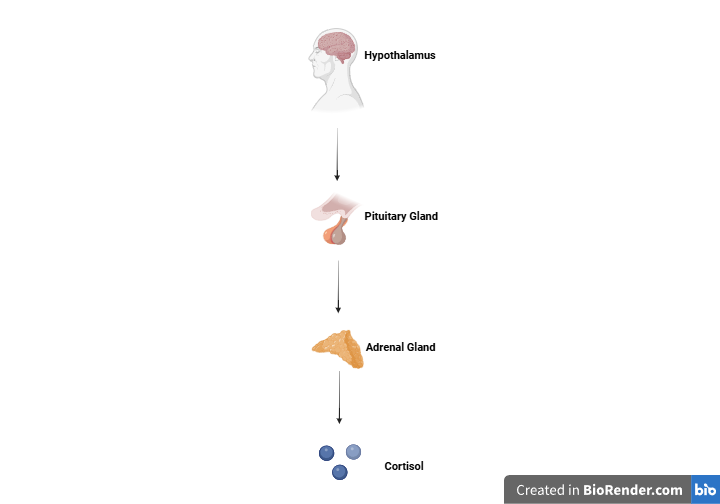
Cortisol, the main hormone released in response to stress signals from the pituitary, plays a critical role in preparing the body’s ability to respond to stress accordingly. Cortisol increases alertness, energy, and attention to help the body defend against the perceived threat by using sugar for energy [2]. This explains why short-term stress can be helpful as the release of cortisol can make you feel more focused and ready to take on the challenge ahead. However, if this stress is prolonged, elevated cortisol levels begin to negatively impact your brain function, particularly in regions that are associated with learning and memory.
Stress is not only a psychological event but is able to be measured biologically. Some examples of this include variations in time between heartbeats (heart rate variability), sweating and skin activation levels (skin conductance), and testing cortisol levels through saliva or blood [4]. Studies measuring cortisol levels in saliva have found that students experiencing academic stress show significant increases in cortisol levels, which are associated with negative changes in test performance [5]. These findings help explain why stress responses can negatively impact our academic performance. However, these effects are not inevitable and can be reduced by managing stress and supporting healthy brain function.
The Brain Under Stress
While stress affects the entire body, its effect on the brain is especially important for understanding learning and memory. One of the most important brain areas involved in learning and memory is the hippocampus. The hippocampus is located on the inner surface of the brain region located near the temples of your head (temporal lobe). The hippocampus plays a critical role in forming and retrieving memories. A helpful way to understand how the hippocampus works is to think of it as a library system for your memories. Every time you learn something new like the information in this paper or when your friend’s birthday is, that information needs to be organized, stored, and labeled in a way that makes it easy to find later when you need it. The hippocampus acts like the librarian by deciding where new information will be stored and can help you find the memory when you need it, just like how a librarian would shelve a book in a particular place and be able to help you find the book later and check it out.
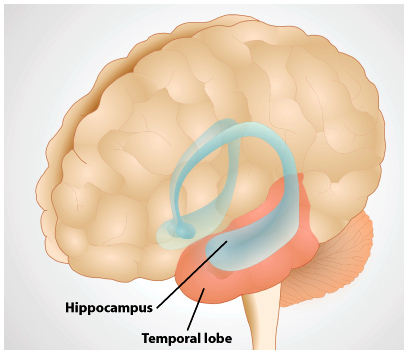
You can “check out” information, or retrieve a long-term memory, during an exam or recall details about your friend because the hippocampus has organized those details in a way that makes it easy to find. However, under stress this system begins to break down and trouble remembering key information starts. Elevated levels of cortisol within the hippocampus interfere with this process, making it harder to properly store new information and retrieve the information that is already stored. As cortisol levels elevate, the librarian becomes disorganized, books are placed on the wrong shelf and in the wrong order, and the librarian can no longer find the book you’re looking for even though you know that the book is somewhere in the library.
A study examined youth with post-traumatic stress symptoms (PTSS) to look at stress’s effect on the Hippocampus. They had the participants complete a task to test their ability to learn, remember, and recall information. Using fMRI, an imaging technique that shows how much oxygenated blood is present, they showed that stress reduced activity in the hippocampus during memory recall tasks, supporting the idea that this “library system” becomes less active and accessible under stress [6]. As you complete tasks the brain needs more oxygen to do so and it is delivered through our blood. Elevated cortisol levels additionally affect the Hippocampus through structural changes. Mice exposed to different stress conditions were found to have reduced size of their hippocampus compared to mice who were not exposed to these conditions [7]. Shrinking of the hippocampus leads to difficulty forming new memories and processing information. Imagine the librarian has a hippocampus that has been shrunk due to stress, the librarian wouldn’t be able to help you find the book you need or may forget what book they are looking for in the moment.
As stress continues to increase its effects begin to be the opposite. An example of this comes from an experiment that used rats, exposing them to 30 minutes of restraint and 30 tailshocks. When looking at their hippocampus, reduced connections were observed between their neurons [8]. The more two neurons communicate with each other, the stronger their connection becomes. This strengthening makes it easier for signals to pass between these neurons in the future which is thought to be how memories form in the first place. This study found that the neurons were less able to strengthen their connections after stress.
Another example of stress’s effect on learning and memory is present in individuals with Cushing’s disease which causes an overproduction of cortisol. A study examining cognitive effects, specifically in memory and executive functioning, in participants with Cushing’s disease found that high cortisol concentration was a significant risk factor for cognitive impairment. Furthermore, consistently high cortisol levels contribute to increased body weight and high blood glucose further contributing to inflammation within the body and neuronal damage [9]. Chronic stress occurs when the body stays in a heightened state of stress for long periods, leading to prolonged activation of the body’s response to stress. These findings suggest that long-term stress can have serious negative effects on learning and memory.
Ways to Reduce the Effects of Stress on Learning and Memory
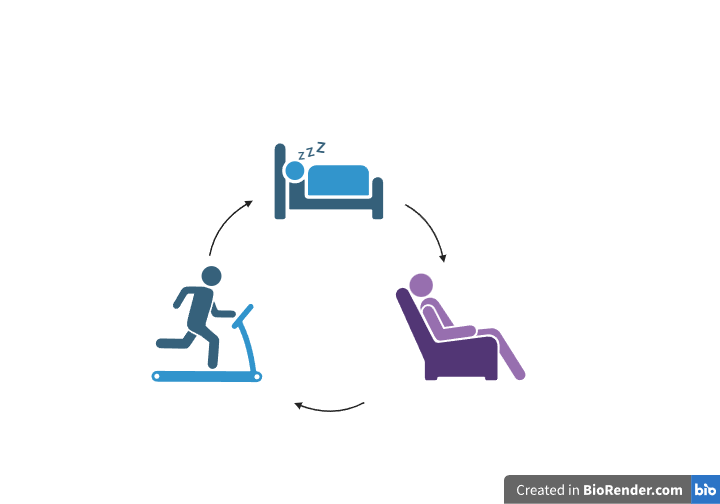
Stress can interfere with memory, attention, and overall brain function, so what can you do to reduce its impact? While it may not be possible to completely eliminate stress, especially in college, research shows that certain habits can help regulate the stress response and protect brain systems involved in learning. One of the most important factors that many of us neglect is sleep. Sleep plays a critical role in memory consolidation where newly learned information is stabilized and stored correctly in the brain. Similar to a librarian organizing new books so they can be found easily later. During sleep, the hippocampus replays patterns of neural activity from the day, strengthening connections between neurons and helping to change short term memories into long term memories [13]. When stress disrupts sleep, this process becomes less effective. Lack of sleep additionally can elevate cortisol levels, further impairing hippocampal functions [14]
Physical activity is another way to counteract the effects of stress on the body. Exercise has been shown to regulate cortisol levels and increase the release of a protein that supports neuron growth and plasticity [15]. This protein plays an important role in the hippocampus as it helps strengthen learning and memory processes. A study had participants complete one of the conditions, intense sprinting, light running, or rest. Individuals who were in the intense exercise condition learned 20% faster after exercise and had increased levels of the protein that supports neuronal health compared to the other groups [16]. Regular exercise not only reduces stress but supports the brain’s capacity to learn.
Other methods for dealing with stress directly include mindfulness and relaxation practices. Mindfulness involves focusing attention on the present moment, which has been shown to increase connectivity in brain regions affected by stress and lower cortisol levels [17,18]. Even taking a few minutes out of your day to meditate and reflect on the day can help you be prepared for what lies ahead.
When Stress Helps
Stress exists as a spectrum, and its effects on learning and memory depend on how intense it is, how long it lasts, and whether you feel in control of the stress. Stress in small amounts can actually improve performance. This idea suggests that performance increases with arousal up to a certain point and after that point performance will begin to decrease [10]. In a study examining cognitive control using a color-word task, participants exposed to moderate levels of controllable stress showed improved performance compared to those who were not exposed [11]. Another example of this found that short term stress can enhance brain function at the cellular level. Rats exposed to short term stress had increased growth of new neurons in the hippocampus. This growth was caused by supporting brain cells releasing a growth factor that promoted the development of new brain cells [12].
Study Strategies That Work
Understanding how stress affects the brain can help us to develop study strategies that work. Managing how and when you study can also influence how stress affects learning. Making sure to study in advance for exams instead of cramming, taking regular breaks, and studying in a calm environment can help keep exam stress manageable. By supporting the brain through sleep, exercise, and effective study habits, students can reduce the effects of stress and allow for learning to occur efficiently.
One of the most effective study strategies is spacing out study sessions over time rather than cramming all at once. While cramming may feel productive in the moment, it often occurs under high stress conditions and does not allow the brain enough time to properly store the information you need. Studying with spaced repetition gives the hippocampus opportunities to strengthen neural connections, making it easier to retrieve information later on an exam [19,20]. Instead of a librarian rushing to organize and store the books, the librarian has time to process the books thoroughly. Another proven technique for studying is active recall, which involves testing yourself instead of just rereading your notes. Actively trying to retrieve information strengthens memory pathways and makes future you be able to retrieve the information more efficiently, like a librarian who is consistently asked where the same popular book is, the more it is requested, the more easily they will find it [21]. Especially in STEM classes, learning techniques of active recall have helped me perform significantly better on exams compared to when I was just reading my notes. Reading your notes is a passive form of studying and can create a false sense of familiarity and confidence without truly being cemented into your mind.
Though it is difficult to put into practice, sleeping enough the night before an exam can make a world of difference on your performance. Without adequate sleep, the material may be harder to recall, and your attention to the test could suffer. Study in advance, sleep well, and use effective strategies to overcome stress’s effect on learning and memory. Looking back on my first exam, it wasn’t that I hadn’t studied enough. It was that stress had taken over leaving me unable to recall information I knew I had learned. My racing heart, panicking, and trouble thinking was not failure, but signs of my brain shifting my focus away from memory recall and toward survival. Understanding how stress disrupts memory can help us to prepare for experiences like that exam and prevent future disruptions.
Sources
[1] Schneiderman, N., Ironson, G., & Siegel, S. D. (2005). Stress and health: psychological, behavioral, and biological determinants. Annual review of clinical psychology, 1, 607–628. https://doi.org/10.1146/annurev.clinpsy.1.102803.144141
[2] American Psychological Association. (2024, October 21). Stress Effects on the Body. American Psychological Association; American Psychological Association. https://www.apa.org/topics/stress/body
[3] Cleveland Clinic. (2023, November 22). Endocrine System: What Is It, Functions & Organs. Cleveland Clinic. https://my.clevelandclinic.org/health/body/21201-endocrine-system
[4] Dorsey A, Scherer E, Eckhoff R, et al. Measurement of Human Stress: A Multidimensional Approach [Internet]. Research Triangle Park (NC): RTI Press; 2022 Jun. Available from: https://www.ncbi.nlm.nih.gov/books/NBK589926/ doi: 10.3768/rtipress.2022.op.0073.2206
[5] Jennifer A. Heissel, Emma K. Adam, Jennifer L. Doleac, David N. Figlio, Jonathan Meer; Testing, Stress, and Performance: How Students Respond Physiologically to High-Stakes Testing. Education Finance and Policy 2021; 16 (2): 183–208. doi: https://doi.org/10.1162/edfp_a_00306
[6] Carrión, V. G., Haas, B. W., Garrett, A., Song, S., & Reiss, A. L. (2010). Reduced hippocampal activity in youth with posttraumatic stress symptoms: an FMRI study. Journal of pediatric psychology, 35(5), 559–569. https://doi.org/10.1093/jpepsy/jsp112
[7] Hyun Seung Shin, Seung Hyun Lee, Ha Jung Moon, Yun Hee So, Hyeon Jung Jang, Lee, K.-H., Ahn, C., & Jung, E.-M. (2024). Prolonged stress response induced by chronic stress and corticosterone exposure causes adult neurogenesis inhibition and astrocyte loss in mouse hippocampus. Brain Research Bulletin, 208, 110903–110903. https://doi.org/10.1016/j.brainresbull.2024.110903
[8] Foy, M. R., Stanton, M. E., Levine, S., & Thompson, R. F. (1987). Behavioral stress impairs long-term potentiation in rodent hippocampus. Behavioral and Neural Biology, 48(1), 138–149. https://doi.org/10.1016/s0163-1047(87)90664-9
[9] Sun, Y., Xu, J., Zheng, X., Li, C., Kong, D., Wu, Q., Zhu, Z., Feng, S., & Zhang, Y. (2025). The impact of prolonged high-concentration cortisol exposure on cognitive function and risk factors: Evidence from Cushing’s disease patients. Journal of Alzheimer’s disease reports, 9, 25424823251338161. https://doi.org/10.1177/25424823251338161
[10] Kim, E. J., & Kim, J. J. (2023). Neurocognitive effects of stress: a metaparadigm perspective. Molecular Psychiatry, 28, 1–14. https://doi.org/10.1038/s41380-023-01986-4
[11] Henderson, R. K., Snyder, H. R., Gupta, T., & Banich, M. T. (2012). When does stress help or harm? The effects of stress controllability and subjective stress response on stroop performance. Frontiers in psychology, 3, 179. https://doi.org/10.3389/fpsyg.2012.00179
[12] Kirby, E. D., Muroy, S. E., Sun, W. G., Covarrubias, D., Leong, M. J., Barchas, L. A., & Kaufer, D. (2013). Acute stress enhances adult rat hippocampal neurogenesis and activation of newborn neurons via secreted astrocytic FGF2. ELife, 2, e00362. https://doi.org/10.7554/eLife.00362
[13] Paller, K. A., Creery, J. D., & Schechtman, E. (2021). Memory and Sleep: How Sleep Cognition Can Change the Waking Mind for the Better. Annual review of psychology, 72, 123–150. https://doi.org/10.1146/annurev-psych-010419-050815
[14] Wright, K. P., Jr, Drake, A. L., Frey, D. J., Fleshner, M., Desouza, C. A., Gronfier, C., & Czeisler, C. A. (2015). Influence of sleep deprivation and circadian misalignment on cortisol, inflammatory markers, and cytokine balance. Brain, behavior, and immunity, 47, 24–34. https://doi.org/10.1016/j.bbi.2015.01.004
[15] Ferris, L. T., Williams, J. S., & Shen, C. L. (2007). The effect of acute exercise on serum brain-derived neurotrophic factor levels and cognitive function. Medicine and science in sports and exercise, 39(4), 728–734. https://doi.org/10.1249/mss.0b013e31802f04c7
[16] Winter, B., Breitenstein, C., Mooren, F. C., Voelker, K., Fobker, M., Lechtermann, A., Krueger, K., Fromme, A., Korsukewitz, C., Floel, A., & Knecht, S. (2007). High impact running improves learning. Neurobiology of Learning and Memory, 87(4), 597–609. https://doi.org/10.1016/j.nlm.2006.11.003
[17] Stacy Ruther, Eric Jackson, Eric vanSonnenberg (2017). Mindfulness on the brain: a review of structural and functional MRI findings in mindfulness-based stress reduction, European Journal of Radiology, Volume 195, 2026, 112619, ISSN 0720-048X, https://doi.org/10.1016/j.ejrad.2025.112619.
[18] Turakitwanakan, W., Mekseepralard, C., & Busarakumtragul, P. (2013). Effects of mindfulness meditation on serum cortisol of medical students. Journal of the Medical Association of Thailand = Chotmaihet thangphaet, 96 Suppl 1, S90–S95.
[19] Rodriguez, F., Rivas, M. J., Matsumura, L. H., Warschauer, M., & Sato, B. K. (2018). How do students study in STEM courses? Findings from a light-touch intervention and its relevance for underrepresented students. PloS one, 13(7), e0200767. https://doi.org/10.1371/journal.pone.0200767
[20] Susser, Jonathan & Mccabe, Jennifer. (2012). From the lab to the dorm room: Metacognitive awareness and use of spaced study. Instructional Science. 41. 10.1007/s11251-012-9231-8.
[21] Xu, J., Wu, A., Filip, C., Patel, Z., Bernstein, S. R., Tanveer, R., Syed, H., & Kotroczo, T. (2024). Active recall strategies associated with academic achievement in young adults: A systematic review. Journal of affective disorders, 354, 191–198. https://doi.org/10.1016/j.jad.2024.03.010